
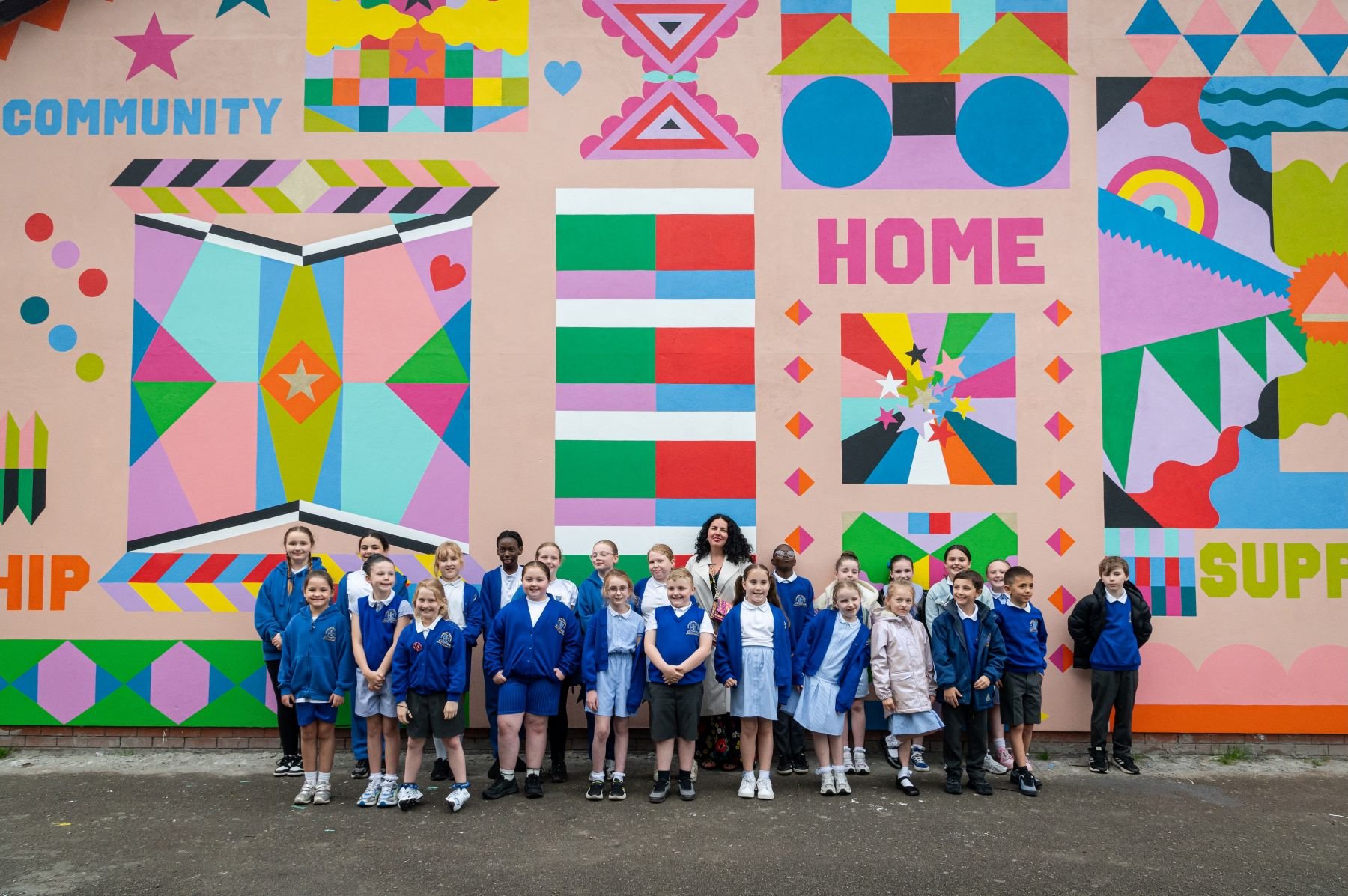
Home by Cherie Grist, 2024, produced by Heart of Glass
Photo: Jazamin Sinclair
Belonging by making: What we learn when we make art together
Making art with other people is less about delivering and more about building connections – slowly, carefully and with a lot of tea. So says Rhyannon Parry, creative producer at Heart of Glass.
After ten years working across St Helens and Knowsley, I’ve seen how creativity can help people feel part of something, feel proud of where they live and feel seen.
I didn’t plan to work in community arts. I grew up locally and studied painting at St Helens College. Back then, I’d never heard of socially engaged art. When I started at Heart of Glass, I realised the power of connection and making art with people.
Working in libraries, women’s groups, youth projects and community centres pulled me in. Meeting new groups to work with, trying something new together. Our communities are full of people doing amazing work. Community leaders, kind neighbours, partner organisations and local artists – it’s a privilege to be part of these networks.
Communities at the centre
Co-creation gets talked about a lot. For me it’s simple – communities at the centre. Artists bring the expertise and imagination that allows everyone involved to contribute and feel seen. Alongside the artist, you have producers , community organisations and residents – bringing projects to life, shaped by everyone’s insight, relationships and lived experience .
One example was a street art programme across St Helens and Knowsley with older residents, school groups, people in recovery, artists, young people in the restorative justice system. At first, some weren’t sure about us. But over time, we built trust.
People came with ideas, got involved with making the work, shared stories that informed the content. That’s when it stopped being a project and became part of the place. People saw themselves in the murals – their street, their families, the nature in the estate.
It’s about people shaping the pace, the tone, the direction. You have to listen – properly listen, which means holding space for whatever people bring: nerves, humour, grief, exhaustion. People carry their lives with them.
Why the space matters
Where a project happens shapes everything. A library, a food pantry, a family centre, the working men’s club – these places already hold people’s lives. When you walk into a gallery, it can feel like ‘this isn’t for me’. But if you’re in a space you already know – where you’ve had a brew, chatted to neighbours, taken your kids – you start from a place of ease.
Someone I first met through a group was suspicious at first. Months later, she was inviting us in with open arms. That didn’t happen because we pushed her. It happened because we visited every week and got to know them as people before we began making.
Continues…
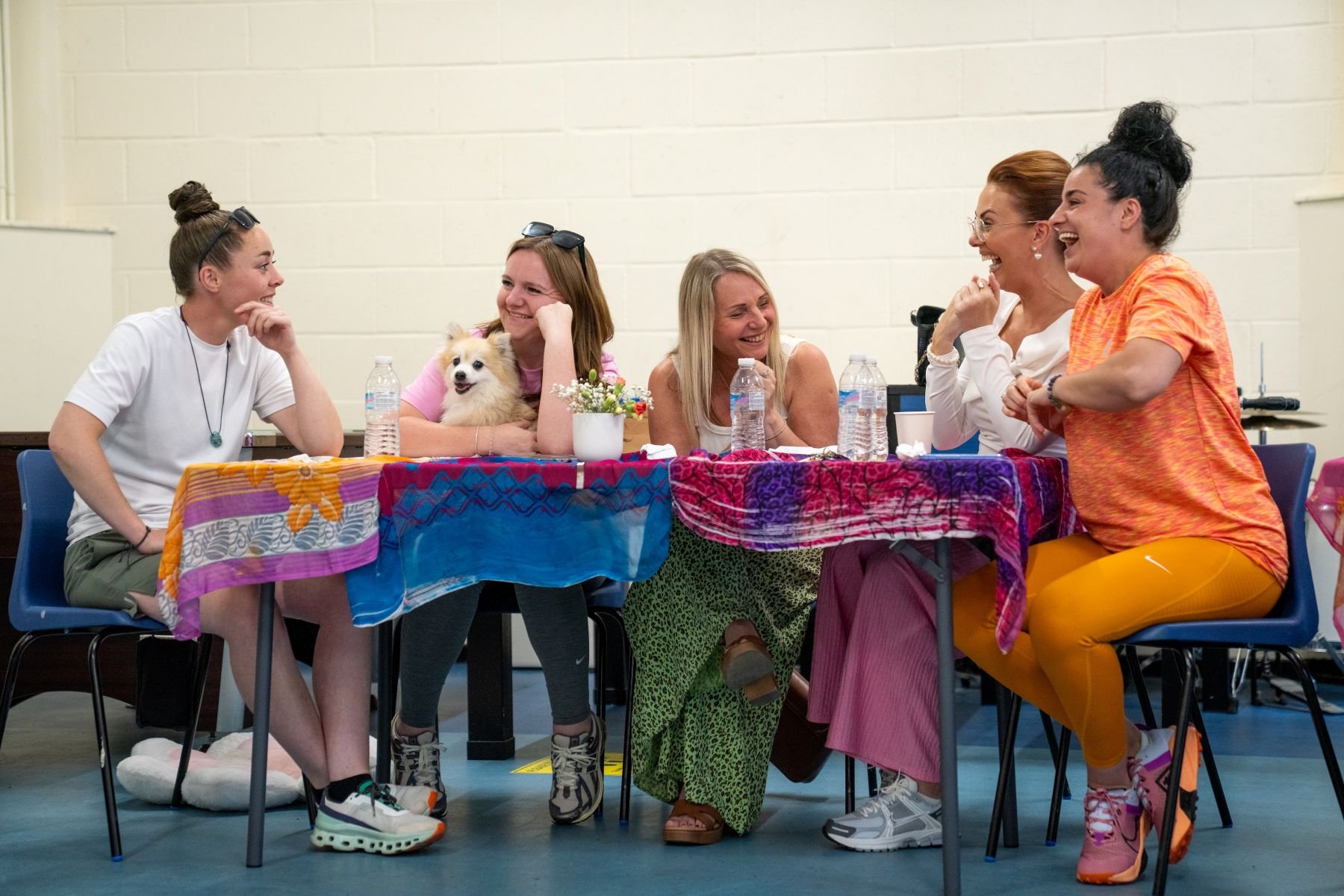
Lucky Tonight by Afreena Islam-Wright, at Centre 63, Kirkby. Photo: Jessica Meade
Pride of place
People often talk about building cohesion, but in practice it’s very simple: people coming together and feeling proud of what they’ve made. Our public artworks are an example. We were told they’d get trashed but they didn’t and, years on, they still look beautiful.
Our first ever mural was developed back in 2022. We approached it very cautiously. We invited young people in the restorative justice system to join workshops early on. Then, during the painting by the artists Nomad Clan, a group of young people came every day for two weeks just to sit, watch and chat. We were welcomed with real generosity – ice creams, check-ins, and a community looking after the artists as much as the work.
Across all our work, one thing keeps returning: the importance of small, shared moments of celebration. Often, it’s a cup of tea and a moment to stand back together and say, “We did this ”.
For example, we recently worked together with Come Together Hub and artists Aimee and Taran (Atticus Arts) to create a piece of music with people in recovery. What made it special was the openness and willingness to have a go, which culminated in a shared performance at a local community space – with families present and real pride in what had been made together.
Art as a protective force
We live in a time when communities are constantly being urged to be resilient without any resources . Art can’t fix everything – but it can offer something to hold onto. Sometimes resilience is showing up every week. Sometimes it’s trying something new or feeling a little braver than before. In a recent singing project one person refused to sing. Then one day he just said: “Oh f**k it, I’ll give it a go.” That moment – of taking a risk, of joining in – that’s special.
Work like this creates a ripple effect: one person shows up, tells a friend, who shares with a neighbour. Stories are uncovered, perspectives are shared, new possibilities emerge. Art connects across difference, offering space for trust, care and understanding.
A recent example shows this beautifully. Lucky Tonight is Afreena Islam-Wright’s performance/pub quiz telling her story as a daughter in a family of Bangladeshi origin growing up in Old Trafford.
After careful thought about where the work should be presented, we decided on two community centres, both in a predominantly white, working-class neighbourhood in St Helens and Knowsley. We wanted Afreena to feel safe, and the placement of the work really mattered.
The community rallied – thanks to long-term relationships, trust and support from our partners there – and the event was fully booked, even requiring an extra table. As one participant said: “Afreena has given me quite an insight into her life and I’m absolutely in awe.”
Building strong communities
You can’t build trust in a few months. People need to know you’re not flying in and flying out. Belonging isn’t something you deliver. It’s something you make together – through cups of tea, small risks, shared stories and the gentle work of showing up – again and again.
If I could tell funders and decision makers one thing, it’d be this: go visit the communities and the groups already doing the work. They know what they need, and they’re not afraid to say it. Real relationships don’t happen overnight – they take time. Sometimes years.
Join the Discussion
You must be logged in to post a comment.