
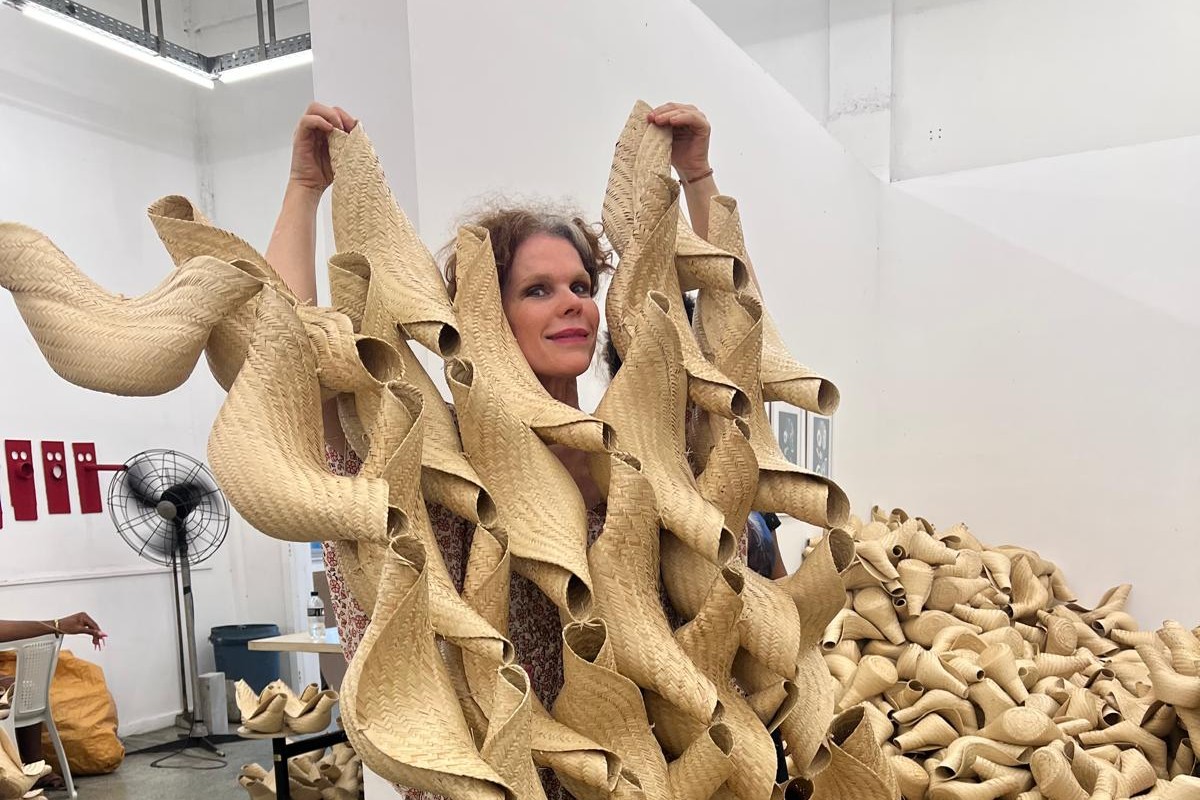
Laura Lima surrounded by her in-process Communal Nests, 2025
Photo: Andrea Nitsche-Krupp
How a research trip to Rio helped shape a solo show
Art Fund’s Joe Jefford talks to Andrea Nitsche-Krupp about her Laura Lima show at the ICA.
For 15 years, Art Fund’s Jonathan Ruffer curatorial grants have supported curators at different stages of their careers, enabling research that might otherwise be out of reach.
Since launching in 2012, the programme has supported more than 600 curators and museum professionals, funding travel and practical costs for collections and exhibition research across the UK and internationally.
One recent recipient is Andrea Nitsche-Krupp, exhibitions curator at the Institute of Contemporary Arts (ICA) in London. Her grant supported a research trip to Rio de Janeiro as part of her preparation for Laura Lima: The Drawing Drawing (7 January – 29 March 2026).
The visit enabled her to spend time with the artist and experience the cultural and artistic environments that have shaped Lima’s work. I spoke to Andrea about the experience, and the role her grant played in developing the exhibition.
JJ: How did your visit to Laura Lima’s studio help shape the exhibition?
AN-K: My time in Rio was invaluable in shaping how I approached curating Laura Lima: The Drawing Drawing at the ICA. Having never visited Brazil before, I couldn’t fully grasp much of the environmental, cultural and social context of Laura’s work until I experienced it first-hand. And that’s important as this is Laura’s first solo exhibition in London and introduces her work to UK audiences. Being in Brazil helped me understand how its rhythms, histories and ways of living are deeply woven into her practice.
Spending time in Laura’s studio with her team was equally formative. Seeing how she works through ideas, materials and conversations revealed a lot about her artistic priorities. She approaches everything with a deliberate openness – intuitive, analytical, adaptive – yet always anchored by the logic of the work. Listening to discussions unfold with her team about what was working, what wasn’t and what might come next offered rare insight into the inner workings of her practice. You can never fully understand an artist’s work until you’ve spent sustained quality time in their studio.
Beyond the studio, Laura generously introduced me to artists, makers and thinkers across the city – from sculptors and botanists to writers and activists. What emerged was a sense of an interconnected ecosystem of practice and support – exchange and relationality, which is strongly recognisable in Laura’s work. The trip fundamentally deepened my understanding of the context in which her practice emerges, and that understanding is woven throughout the exhibition.
JJ: How did you translate Laura’s environment for a London audience?
AN-K: There’s no simple way to ‘bring Rio to London’, nor was that the aim. Instead, the exhibition focuses on qualities inherent in Laura’s work: its vitality, its responsiveness to environment, and its sensitivity to bodies, objects and social situations. The energy of Rio isn’t illustrated but sensed through how the work unfolds and engages.
Laura’s way of working, developed since the early 1990s, is radical. Her work exists through relationships between bodies, sites, movement and social conditions, rather than as a fixed object or performance. It can’t be understood through vision alone; it requires a retuning of perception. This experiential approach has deep roots in Brazilian experimental practice.
Her work is non-hierarchical and adaptive. There are no rehearsals; it unfolds in real time, shaped by the space and the people present. In a UK context, this can be challenging but also hugely generative – and challenging institutional norms is a key part of Lima’s work. It requires trust and flexibility, allowing the work to resonate with new audiences.
JJ: You also visited A Gentil Carioca gallery. How did that inform the exhibition?
AN-K: Laura co-founded the A Gentil Carioca gallery with Marcio Botner and Ernesto Neto, so its history is closely tied to her own. Hearing reflections on its early ambitions and experiments was illuminating. I visited during Abre Alas, the gallery’s annual exhibition for emerging artists. Laura is a passionate advocate for younger generations and her influence on contemporary Brazilian practice is widely felt.
Continues…
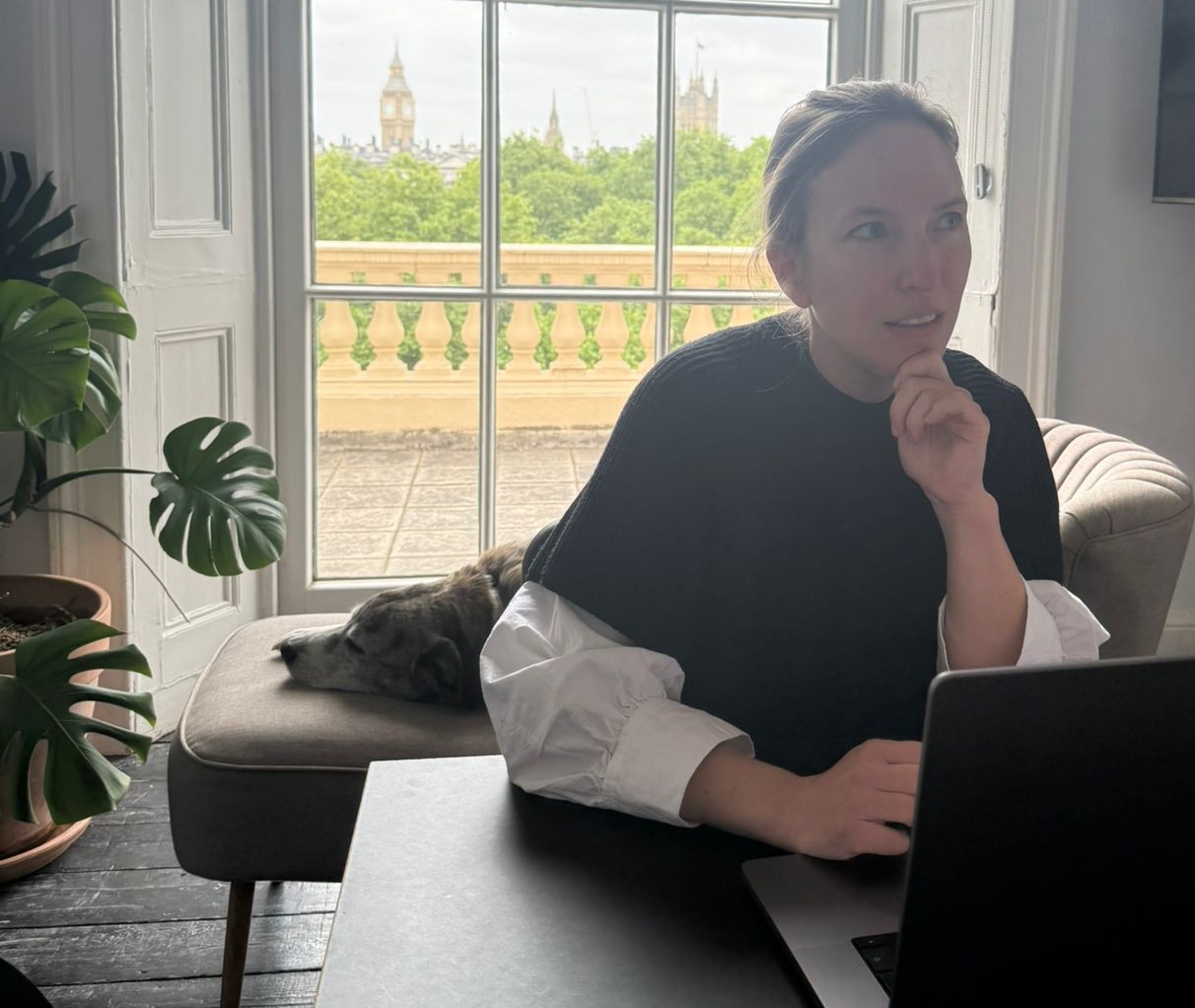
Andrea Nitsche-Krupp is one of more than 600 curators and museum professionals supported through the Jonathan Rufford curatorial grants programme
JJ: What ideas for public programming came out of the trip?
AN-K: I met the team at Solar dos Abacaxis, an autonomous, collaborative institution in Rio focused on experimental curating, education and social transformation through the arts. In conversation with its director, Adriano Carneiro de Mendonça, we recognised shared values around sustainability, alternative curatorial models and artist-centred practice.
As a result, we’re developing a discursive programme linked to the exhibition, that will take place towards the end of Laura’s show at the ICA, with hopes of a parallel presence in Rio. The aim is to create a platform connecting our two cities and communities, extending the exhibition beyond the gallery and into a wider, transnational exchange.
JJ: What advice do you have for future applicants to the programme?
AN-K: Apply with clear research aims but leave room for what you can’t anticipate. Some of the most valuable insights came from unplanned encounters and conversations. Flexibility is essential. At one point, swimming in the sea became the setting for a conversation about productive distraction and disorientation in art. Those moments are part of the research too.
Spending time with an artist in their own space allows for organic conversations and questions born of impromptu curiosities, prompted by small clues: a book on the shelf, an offhand comment, a particular material choice. This depth of exchange builds understanding, trust, and leads to more rigorous, grounded exhibitions. Be open to the unexpected.
Find out more about Art Fund’s Jonathan Ruffer curatorial grants.
Join the Discussion
You must be logged in to post a comment.