
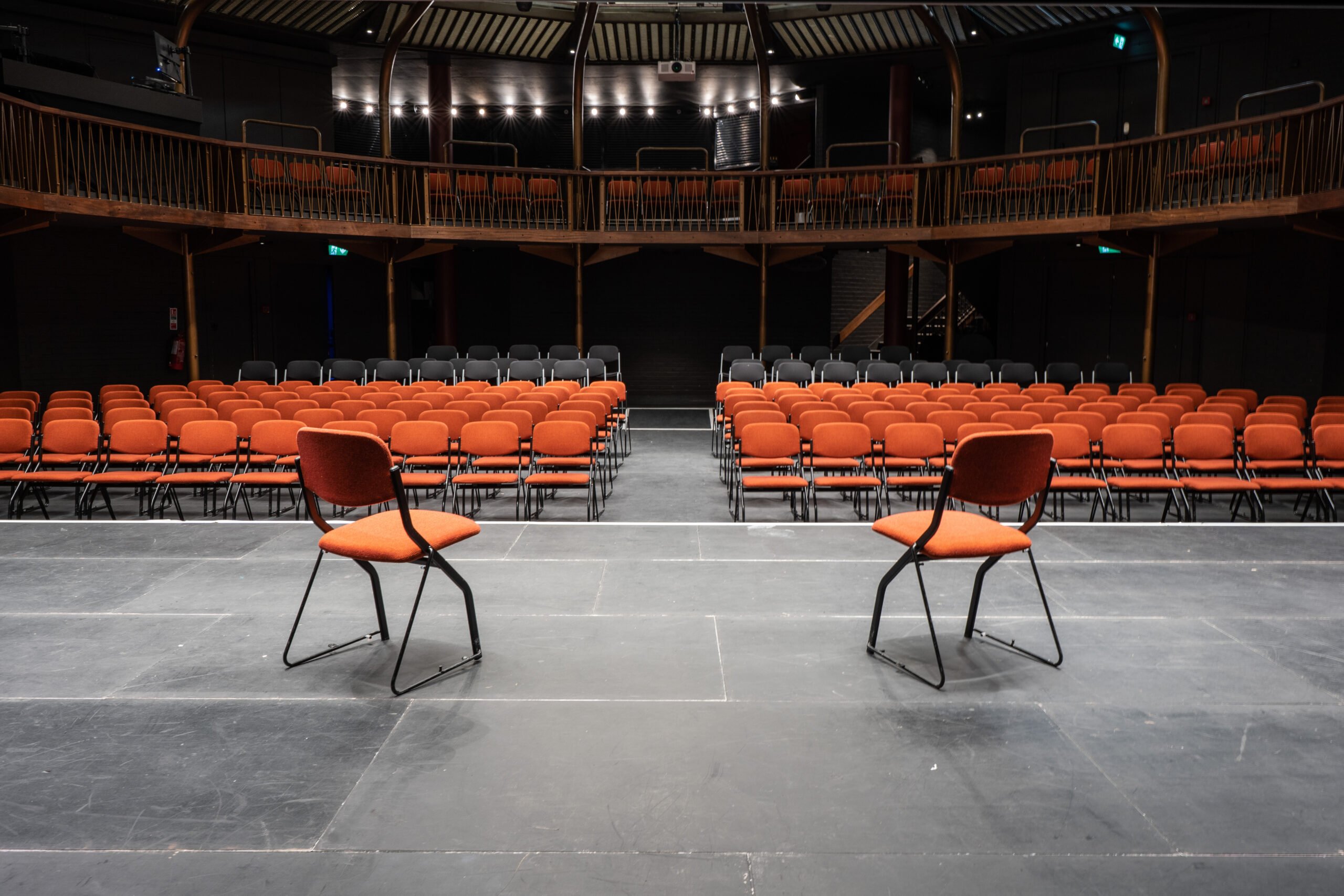
Treating venue hire as purely an income generation function ignores the wide range of engagement opportunities it can facilitate
Photo: The Albany / Elena Rae Ledgister
The value of venue hire
Find a cultural organisation with a building and more than likely you’ll find a ‘hire us’ call to action on their website, writes Carolyn Ehman, head of business development at The Albany.
According to the Association for Cultural Enterprises, 89% of its membership base operate commercial venue hire activity, making up on average 19% of annual earned income.
The types of hireable space vary – event space and meeting rooms being some of the most common – each having the potential to attract a very different audience than the cultural organisation’s core demographic.
There is often a misconception that venue hire functions purely as a commercial endeavour, though we don’t need to look far to disprove this. Venue hire is not often thought about in terms of its positive or negative impact on a cultural organisation’s values proposition until something goes wrong.
A value mismatch?
Take for example the uproar around Birmingham Rep hiring their spaces as Nightingale Courts during the pandemic. Like all theatres at the time, The Rep was probably looking for any way to generate income to offset the loss of closure.
From a financial point of view, hiring out space to a service that could operate within the constraints of lockdowns makes sense, but the convergence of state and community arts space struck a chord and resulted in a public backlash. This is not unique – recently, many organisations have faced similar backlash from accepting a hire whose values are perceived as misaligned with those the venue.
This misalignment may be true but, in fact, most venues have hire activity that could be seen as a value mismatch – anything from a small meeting for a political party to a large conference for a pharmaceutical company. When funding is decreasing and operational costs are rising, organisations are under increased pressure to generate income to stay afloat, and that means looking to sectors with budget.
A form of gatekeeping
Every organisation will have policies regarding what type of activity it’ll allow in its building but observing them is not simple. Much like debates over what corporate sponsorship is acceptable, corporate venue hire has an undercurrent of reputational risk alongside the operational considerations.
That is not to say organisations shouldn’t accept bookings that don’t align perfectly with their values – financial precarity makes this a difficult decision – but rather it’s worth acknowledging an implicit statement goes along with any external activity in one’s building.
What’s not often recognised, however, is the opportunity for venue hire to open doors to access for those who may not otherwise engage with a particular organisation, or who wouldn’t otherwise have the opportunity to access a specific space.
At its heart, venue hire is a form of gatekeeping. Hire managers don’t own the venue or the event, but they have the power grant access to space. Many cultural organisations have barriers to access, not least because people think the space is not for them – due to the programming, cultural activity or the building layout itself.
Venue hire on the other hand opens the door to people who may never have considered stepping foot in the venue and creates the potential for future engagement and development pathways.
A world of possibilities
Take for example a meeting room in a museum. The act of hiring this kind of space could deepen engagement with an existing audience – by having it available for hire for birthday parties or educational workshops – with the added benefit of extending audience stay and increasing spend.
Most audiences will have no need for a space like this as part of their visit, but there are untapped audiences that would like to use the space for their own activity and find its unique setting an added value.
What businesses operate in your local area that would be excited to access that ‘behind-the-scenes’ room? What impact could a relationship with them have? Might there be new ways of working together, or perhaps generating support for the organisation? How many of the meeting attendees have visited this museum before? What will they tell their friends, their colleagues?
Or how about a theatre space? Performance hires by theatre and dance schools are a brilliant way to introduce young people to a professional theatre space. But think also of other uses. DCMS surveys show only a fraction of people attend theatre on a regular basis – the act of hiring a theatre to organisations for meetings, conferences and trainings creates opportunities to engage audiences who would otherwise not step foot in the venue.
There is also the world of possibilities that emerge when an individual or organisation hires a space as their permanent office or for a regular workshop. These hirers form relationships with an organisation simply by being in the same building, and these casual encounters can lead to a host of conversations and collaboration opportunities.
Pathways to engagement
While all the above scenarios use venue hire to generate income, they each have the potential to create pathways to further engagement, opportunities and champions for your organisation. The examples are broad because there are endless possibilities.
In my 11 years in venue hire I’ve developed relationships with healthcare providers, non-profits, local businesses and a host of creative practitioners. It’s been a privilege to observe their reaction to going into a space they would not normally engage with, and to build relationships that result in new ways of working, creating and understanding a venue’s place in the local community.
Treating venue hire as purely an income generation function ignores the wide range of engagement opportunities it can facilitate. By finding ways to acknowledge and articulate this in our audience development approaches – as well as our reports to funders – strengthens our understanding of our impact and potential to grow and stay relevant to all our audiences – old and new.
Join the Discussion
You must be logged in to post a comment.