

The ability to evolve quickly and efficiently isn't just a digital strategy - it's a survival strategy
The funding squeeze: How stretched budgets are driving digital innovation
As the arts face unprecedented cuts, venues are being forced to rethink their digital investment. But, as Matt Yau of CultureSuite asks, could financial pressures be catalysing a long-overdue revolution in website development and digital strategy?
When Manchester’s Lowry made the switch from a bespoke website build to a continuously evolving website platform, its head of digital Zara Foxcroft expected modest improvements. What she didn’t expect was the creative freedom to respond to opportunities in real time, or the relief of never again waiting years for essential updates.
“We can now craft engaging digital experiences and have the flexibility to adapt when we need to,” she reflects. “It is incredibly exciting to be part of a community of venues all contributing to the platform’s evolution.”
It’s a technological shift being quietly repeated across a sector facing an unprecedented funding crisis where the numbers tell a stark story. But amid this financial turbulence, cultural organisations like Lowry are finding new ways to tilt the balance of power in their favour.
Confronting an uncomfortable truth
Over the years, the sector has combatted funding cuts in various ways. Some venues have successfully diversified their income, others have increased earning through commercial activities and social enterprises. The less fortunate have made programming cuts and laid off staff – a last resort that risks setting off a downward spiral.
But some are looking beyond these typical measures to examine their internal structures and processes. They’re discovering the answer isn’t just cutting costs; it’s investing smarter.
For years, there’s been an uncomfortable truth about digital spending patterns that funding pressures are now forcing into the open. Every three to five years, most cultural organisations rebuild their websites through capital expenditure projects – an approach that’s increasingly unsustainable when budgets are shrinking year-on-year. A £30,000-50,000 website project that seemed manageable in 2019 now represents a significant chunk of an already squeezed budget.
More problematically, it’s an investment that becomes outdated quickly. Procurement processes frequently underestimate the true cost, overlooking ongoing support fees, security updates, hosting expenses and inevitable fixes.
Time and again, I hear of frustrated budget holders caught in a funding flytrap, forced to wait out contracts before they can make a change. These conversations stay with me and it’s hard not to feel disheartened.
Why the disconnect?
This frustration is driving venues to seek alternatives. “As arts organisations first embraced digital, the tendency was to customise everything to evoke our uniqueness – which created very complicated websites and other third-party digital services at significant cost in staff time and dollars,” explains Sue Elliott, general director & CEO of Calgary Opera. “All of that takes away from investment devoted to producing actual arts experiences for audiences.”
Sue’s experience reflects a broader truth: when resources shrink, resourcefulness grows. The sector has proved that alternative models work. Most venues have quietly migrated from expensive, on premise ticketing systems to cloud-based platforms like Spektrix, Tessitura and Tixly.
They’ve experienced firsthand the benefits of predictable subscription costs, automatic updates and not having to maintain servers or worry about software becoming obsolete. Yet many venues cling to the same outdated project-based model for websites they abandoned for ticketing years ago. Why the disconnect?
Leeds: a compelling case study
Leeds City Council provides a compelling case study. Facing the same financial pressures affecting local authorities nationwide, they’re consolidating 15 museum, film, music, theatre and events websites into a single platform. As Shona Galletly, audience development manager explains: “Severe year-on-year budget pressures are hitting the whole cultural sector. So the need to look at delivering cultural services from a different perspective kicks in pretty hard.”
This challenge isn’t unique to the UK. Across the Atlantic, venues are grappling with similar frustrations about digital investment cycles.
“Technological advancement has been at a sprint over the last two decades,” explains Jay Rogers, director of operations at Queens Theatre in New York. “It’s been frustrating to make significant investments in systems that become relatively obsolete within five years.
“The new wave of systems has demonstrated an ability to grow and adapt to ever-evolving technologies. We can finally focus on an effective, consistent approach instead of constantly making left turns to address compatibility issues.”
Continues…
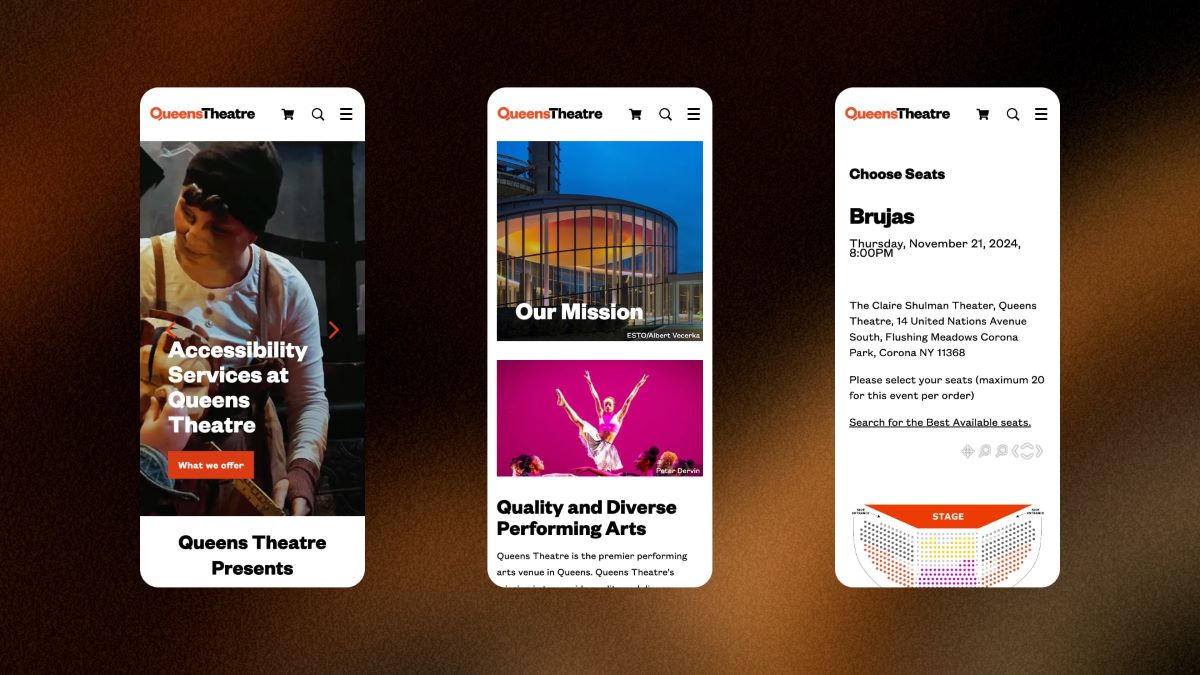
Mobile samples from Queens Theatre New York
Beyond financial planning
Venues exploring continuous evolution models are discovering capabilities they never had with bespoke website builds. Consider accessibility compliance: with the European Accessibility Act in effect, venues face new legal requirements.
Under project-based models, ensuring compliance means building it into the next website build or forking out large sums for an audit and implementation. For venues using continuously evolving models, their platforms evolve with the latest standards, often at no extra cost – making investment predictable and transparent.
The same principle applies to security updates, performance optimisations and new features. Rather than waiting years for the next website build, venues can access improvements immediately when working with cloud-based platforms.
Leeds City Council’s experience illustrates the broader benefits beyond cost savings. Their unified approach projects “revenue gains of over £1 million annually for the top three venues”, says Galletly, through better integration and data sharing capabilities.
Continues…
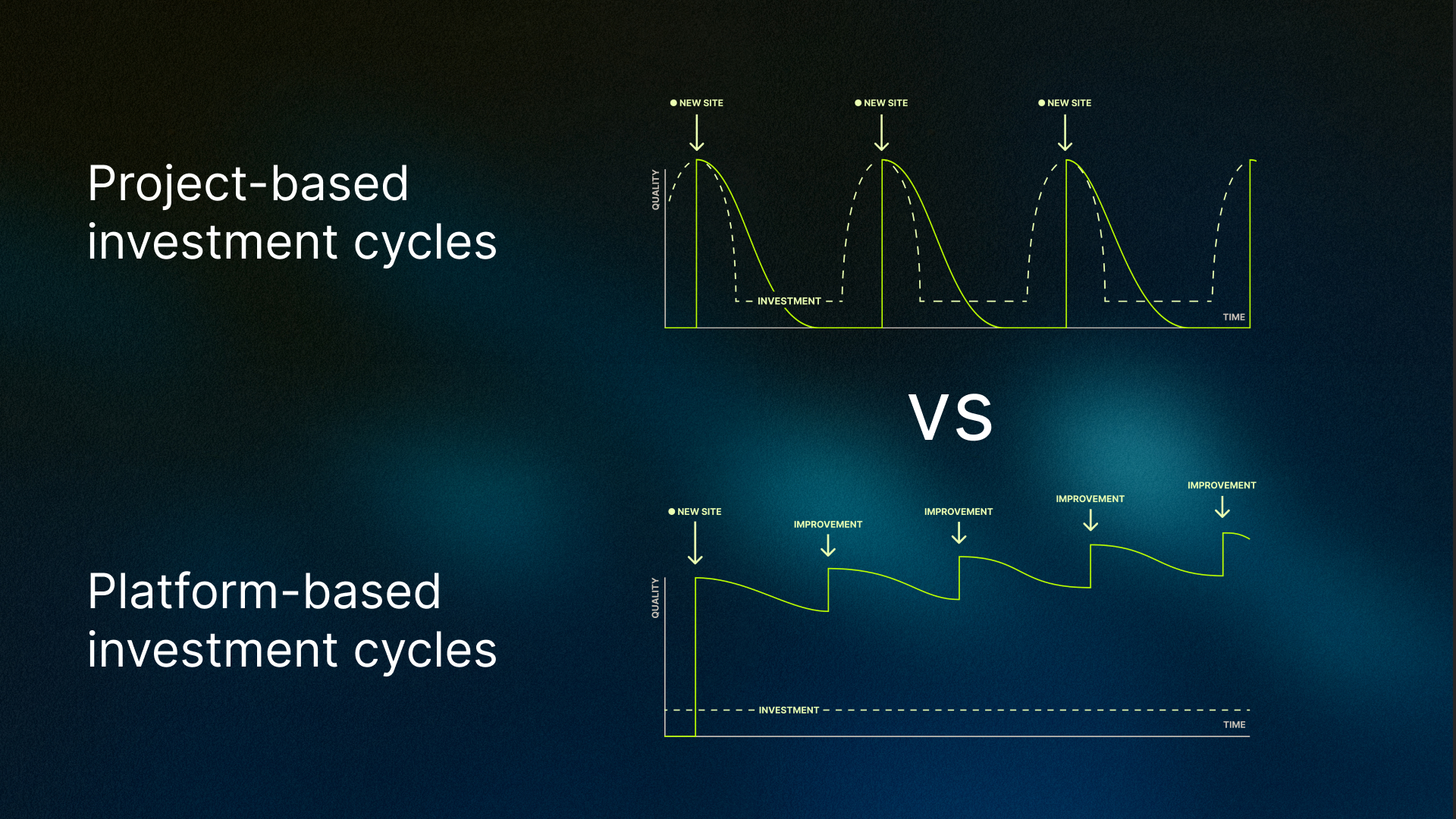
Comparison of different investment cycles
A collective endeavour
The funding squeeze is also forcing venues to redefine what constitutes good value in digital spend. Traditional metrics – cost per page or design uniqueness – are giving way to new measures: adaptability, ongoing value delivery and total cost of ownership over time. A website that costs £40,000 but becomes outdated within three years represents poor value compared to a platform that costs £15,000 annually but continuously evolves.
But perhaps the most significant shift is how venues are beginning to view digital innovation as a collective endeavour. Rather than each organisation solving the same problems independently, platforms serving multiple venues can pool development resources and share solutions, thus addressing the cultural sector’s persistent challenge of duplicating effort across similar organisations.
“Knowing that there are several similar arts and cultural organisations in sunny Manchester on the same platform, it’s a great opportunity to learn from each other, to establish a collective voice and to hold CultureSuite accountable for current and future development,” notes Bill Lam, head of digital innovation at Curious Minds.
Shona Galletly and the Leeds team embrace this collaborative approach: “As Peppered is developed collaboratively, the platform evolves continuously based on common requirements, reducing duplication and fostering innovation across organisations with similar needs.”
The path forward
The venues positioned to thrive share common characteristics: they’ve moved away from thinking about digital as a series of projects towards viewing it as an ongoing capability. They’ve prioritised adaptability over perfection, evolution over revolution.
This doesn’t mean abandoning quality or settling for generic solutions. The most successful approaches combine standardised efficiency with customisation capabilities, allowing venues to maintain their unique identity while benefiting from shared development resources.
Continues…
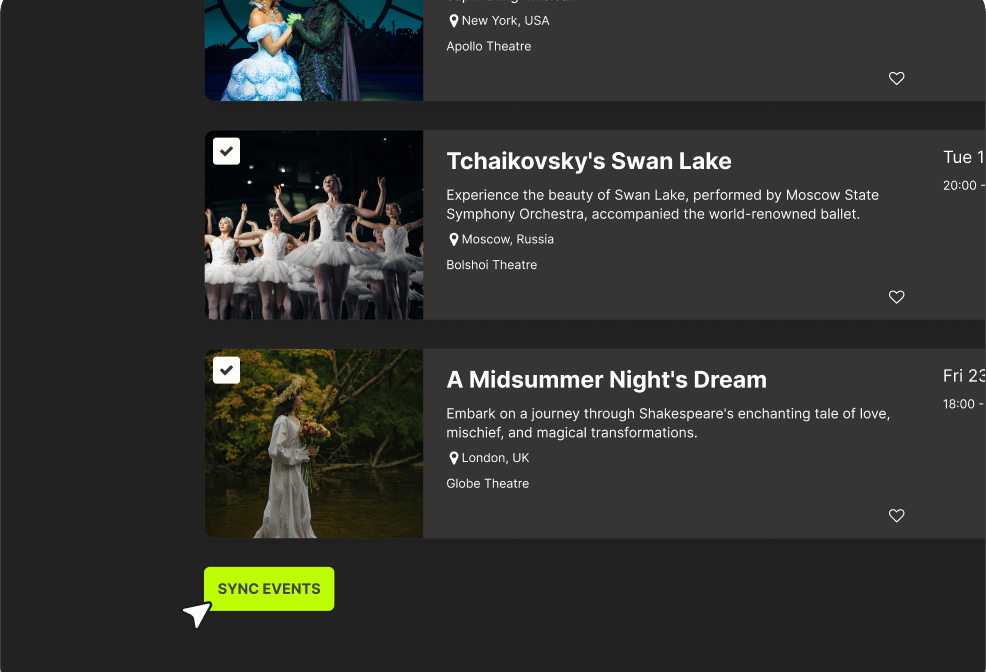
Platforms serving multiple venues can pool development resources and share solutions
Cultural organisations are discovering that collaboration amplifies individual capabilities. Leeds City Council’s ‘upload once’ model across multiple cultural services streamlines operations while creating new revenue opportunities.
For leaders, the lesson is clear: outdated approaches to digital investment aren’t just unaffordable – they’re inadequate and unsustainable. The challenge isn’t finding ways to fund the next website rebuild; it’s recognising that the rebuild cycle itself is the problem.
The ability to evolve quickly and efficiently isn’t just a digital strategy. It’s a survival strategy. In a sector built on creativity and innovation, perhaps it’s fitting that financial constraints are sparking the most creative rethinking of digital strategy we’ve seen in decades.

Join the Discussion
You must be logged in to post a comment.