
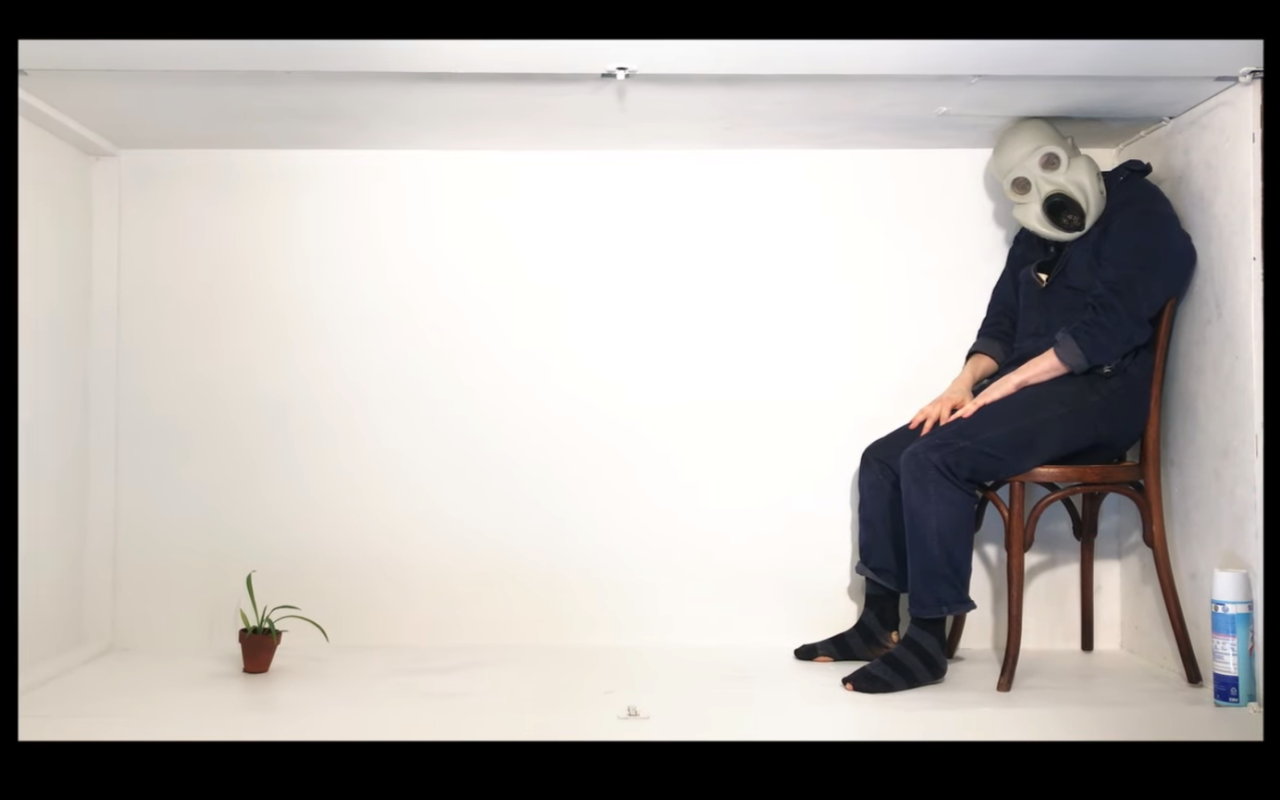
Theatre in Quarantine Mask Study 1, created by Jon Levin, Katie Rose McLaughlin and Joshua William Gelb
Not if, but when: The readiness imperative
In the third and final instalment of his global study into Covid and the cultural and creative sector, Anthony Sargent argues that we must shape our institutions to be ready to withstand the future in all its unpredictability.
In 2020, almost overnight, the cultural sector worldwide was plunged into a crisis with no precedent in living memory. Stages suddenly fell silent, galleries closed and entire workforces, employed and casual, were scattered. The scramble to survive unleashed an explosion of improvised creative energy: bold digital pivots, more nuanced audience relationships, new forms of leadership. But, five years on, what did we really learn? And – crucially – did those learnings position us to be any better prepared for the next systemic shock then we were for the last?
This is not about predicting another pandemic. The next crisis probably won’t look like Covid at all. It might result from political instability, extreme weather, a cyberattack or financial collapse. What we are now facing is not one single existential threat but an age of polycrisis — multiple disruptions – often intersecting – that emerge unpredictably and have long-lasting destructive ‘tails’.
In today’s world agility and readiness are no longer luxuries. They are the baseline for survival. They must be embedded into everything we do – from how we lead and plan to how we support our teams, connect with audiences and understand our purpose in the world.
From crisis to pattern
Some organisations cling to the comforting delusion that Covid was a once-in-a-century anomaly — an unforeseen detour from an otherwise stable trajectory. The real picture is very different.
Systemic shocks are becoming more frequent, more complex and more messily entangled. The climate crisis is not a remote future threat. Already it is disrupting lives and infrastructures. Political and economic instability is spreading, virus-like, around the globe. The malign tentacles of mis- and disinformation are poisoning ever more of our public discourse, undermining our sense of truth and of reality. The rapid evolution of artificial intelligence brings thrilling opportunities but also frightening unknowns.
For cultural organisations, the challenge is not to anticipate the nature of the next threat. It is how to operate in a world where threats are becoming constant and ubiquitous. Readiness must be structural – not just a line in the risk register. It must shape how we make decisions, how we define success, and how we build resilience. Readiness must become a constant 24/7 instinct.
As one Canadian arts leader reflected in the midst of the pandemic: “We’ve stopped waiting for the storm to pass. We’re learning to dance in the rain.” That kind of mindset — pragmatic, inventive, fearless – is now essential.
The forgotten lessons
In the early months of the pandemic many cultural and creative organisations discovered among their staff a cauldron of latent creative energy. They found themselves doing things they had long considered too difficult, too unfamiliar or too risky: launching livestreams in days, swiftly restructuring teams around care and need, giving artists more agency, reaching new audiences through digital and outdoor programming, and even redefining their core purpose to answer the new needs of the new moment.
Many of these innovations seemed full of the seeds of an exciting new future. Yet already many have faded. In many places, empowering hybrid working models have been quietly dropped. The new languages of empathy and trust have been subverted by the dead hand of operational routine. Governance has returned to a pre-crisis rigidity. As the fog of crisis has lifted, so too has the urgency to sustain the new ways of working.
This is what I’ve called pandemic amnesia — a frighteningly fast kind of forgetting, both wilful and casual, in which precious lessons learned have been left unrecorded and unintegrated. Sometimes it’s understandable: exhaustion, financial pressure, the instinct to restore stability. But if we forget all that we learned in the past five years, we will be no better prepared for the next crisis than we were in 2020.
And let’s be clear – there will be a next crisis, probably sooner than we think. But next time we should have the advantage of hindsight. We now know what we’re capable of. That should embolden us, without making us complacent.
A new mandate for leadership
One of the most consistent findings in this five-year global study has been that the organisations that weathered Covid best didn’t just have strong leaders – they had resilient cultures. They were places where trust was practised, not just preached. Where decisions could be made quickly because values were shared and organisational structures were porous and flexible, eschewing rigid, dysfunctional silos. Where teams were allowed – even encouraged – to find their own ways to adapt and innovate in real time.
That kind of leadership is less about charisma and more about culture. It’s not about hectoring rhetoric from the bridge, but about listening, creating space and holding steady through ambiguity. The most effective responses weren’t rooted in certainty, but in a confident capacity to absorb and navigate uncertainty.
The entire mandate for leadership is changing. It now demands inclusivity, agility and humility – not just strategic clarity. It asks leaders to be keen-eyed, visionary wayfinders, not remote commanding heroes. And it calls for governance brave enough to endorse and celebrate experimentation, wise enough to know that familiar skills won’t get us through the next disruption.
This shift is not abstract. It has real implications: how we hire, how we train, how we review performance, how we distribute authority. Cultural institutions that don’t take these changes seriously risk becoming structurally vulnerable.
Audience relationships matter
An under-reported lesson from the pandemic is how many organisations comprehensively transformed and deepened their relationships with audiences. Forced to close their doors, many turned outward creating new kinds of live and online content for specific communities, involving audiences in decision-making, and experimenting with new formats that felt more intimate, more local and more reciprocal.
Those behaviours haven’t disappeared, but they have evolved. Audiences still hunger for cultural experiences that are responsive, meaningful and anchored in shared values. But in times of crisis and disruption audiences notice how institutions behave – not just what they programme.
Readiness, then, is not just internal. It’s relational. It’s about building trust and a sense of authentic relevance with the people we exist to serve, with our creative partners and with our own workforces. And that’s not something you can retrofit in a crisis. That trust has to be earned over time.
A choice point
My third and final report – co-published with the Centre for Cultural Value – completes a trilogy that has followed our sector worldwide through calamitous shock, limping recovery and now, a search for routes to resilience. We are at a decisive moment. Do we treat Covid as a one-off trauma and fall back with relief on the bad old ways of working? Or do we celebrate this once-in-a-lifetime learning experience by integrating all it has taught us into new ways of thinking, of working, of being?
Readiness is not about predicting and trying to pre-empt the future. It’s about shaping institutions that can withstand and accommodate the future — whatever it brings. It’s about creating the kind of working cultures, leadership mindsets and audience relationships able not just to endure tumultuous change and survive it, but to find in existential challenges previously unimagined potential to evolve.
The future will not be a straight line. But if we embrace all the breathless learnings of the past five years – intentionally, courageously and collaboratively – it can be a future that we don’t just inhabit, but which cultural and creative organisations can play a unique role in helping to lead.
The first two studies of this cycle are published on Culture Hive here (the first) and here (the second). The third and final study, of which this article is a distillation, will shortly join the first two on Culture Hive.
Join the Discussion
You must be logged in to post a comment.