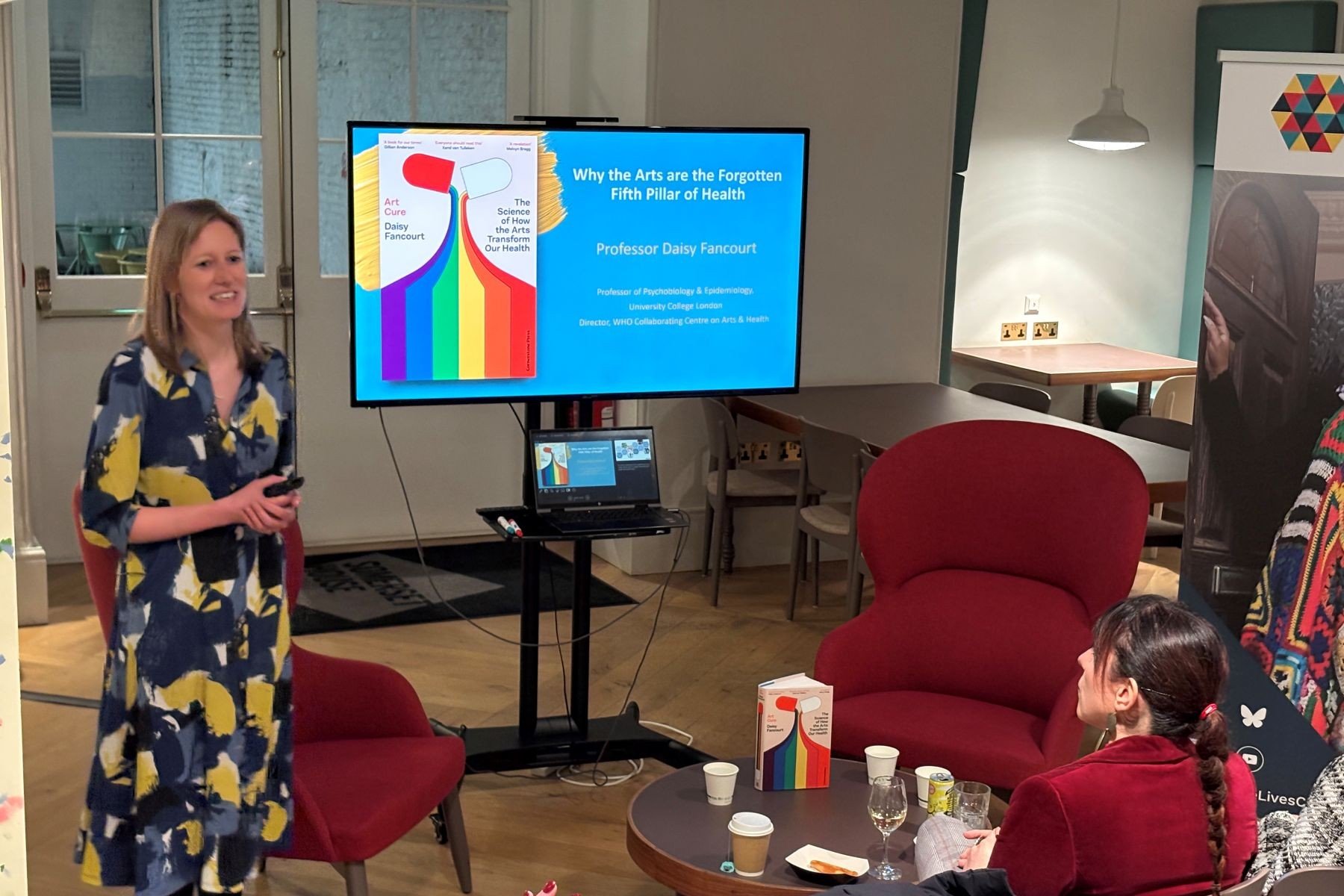
Professor Daisy Fancourt, at the launch of her new book Art Cure, argues the arts are long overdue their 'seatbelt moment'
Is 2026 the ‘seatbelt moment’ for the arts?
In the first article in our series exploring creative health, Daisy Fancourt, author of a new book on how the arts can transform health, thinks 2026 may represent a turning point in arts policy.
If you look back over the last few decades, each one has been marked by a major shift in public attitudes towards a health-promoting behaviour. One of the most memorable and marked was seatbelts. In the 1990s, after decades of scientific research and grassroots campaigning, seatbelts in cars suddenly (finally) became mandatory. But other examples abound.
The 1970s saw a wave of public health dietary guidelines changing the way we thought about the food we eat. In the 1980s, the health benefits of physical activity took front and centre stage. In the early 2000s, smoking bans took off around the world. These shifts – these ‘seatbelt moments’ – are examples of pivot points that have redefined how people think about, value and engage with specific behaviours.
A long overdue moment
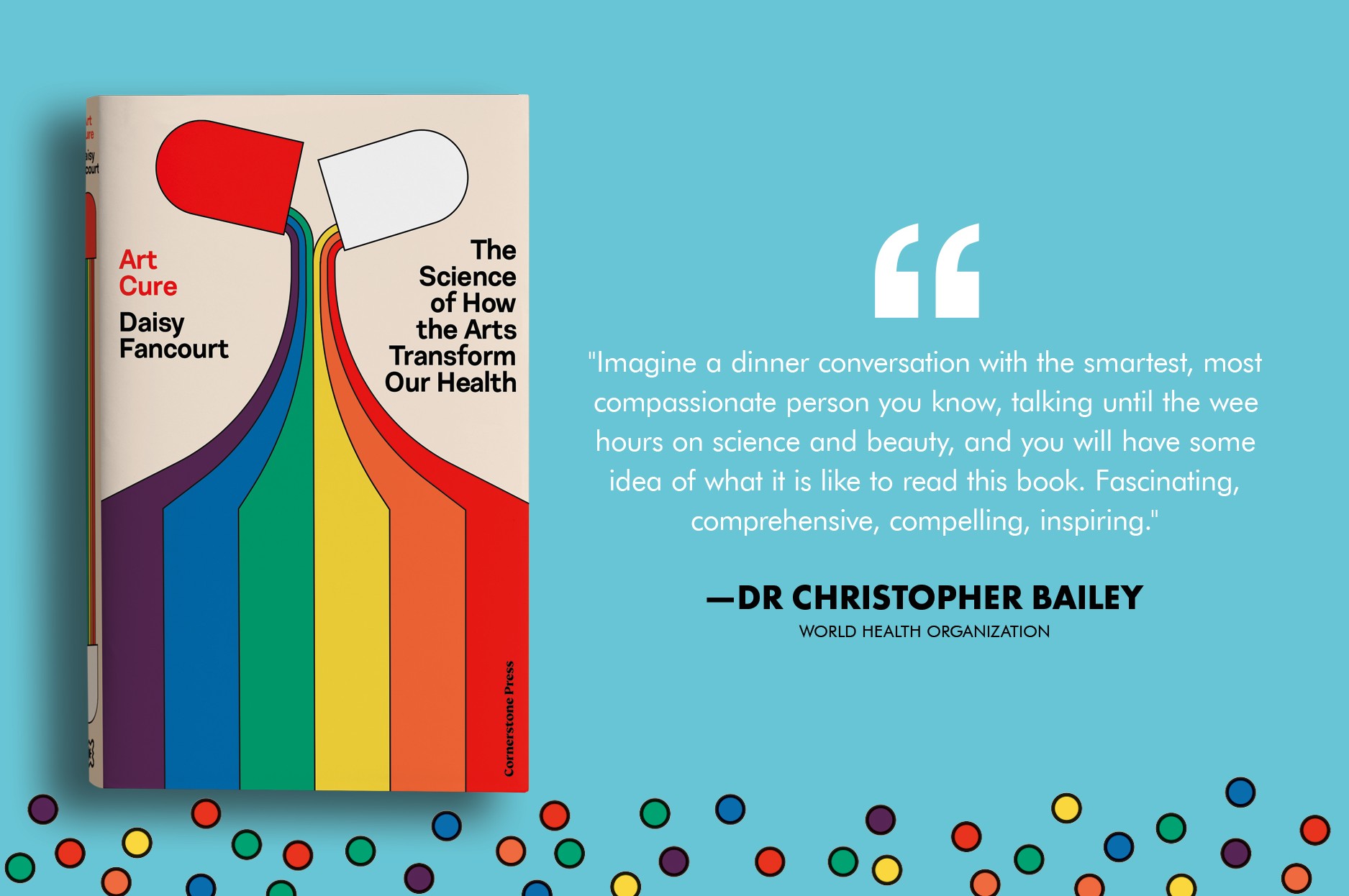
In my new book Art Cure: The Science of How the Arts Transform Our Health, I argue that the arts are long overdue their seatbelt moment. Because right across the spectrum of health and illness, studies now show that the arts can provide tangible, meaningful health benefits.
The epidemiological research my team at UCL and I (and dozens of other scientists around the world) work on is increasingly demonstrating that day-to-day arts behaviours (participating in, viewing and visiting) are related to our future wellbeing and mental and physical health.
With a new £3.5m Wellcome Discovery Award, we’re embarking on a seven-year venture to expand this public health evidence base, examining longitudinal data from 52 countries and probing the molecular biological mechanisms that help to explain such findings. And a growing number of randomised controlled trials are demonstrating that bespoke arts programmes can have clinically meaningful effects on symptoms for people with mental illness, neurological conditions, cardiometabolic disorders and age-related conditions.
Risk of instrumentalisation?
In Art Cure I review this remarkable evidence base and the psychological, biological, social and behavioural processes that explain how the arts impact us and what the evidence tells us about how we could incorporate the arts more into our own lives.
Sometimes I hear concerns that this focus on the health benefits the arts can bring will risk them being instrumentalised – only viewed or funded to support government health targets, with the concept of ‘great art’ for its own sake abandoned and quality diluted in a quest for ‘healing’ arts.
These concerns are important, but it’s not happened for other health behaviours. Take physical activity. I’ve just got back from a walking holiday, and over the weekend I took my kids swimming. I didn’t do either of these things for health – I did them simply because they’re fun. But when I have a sedentary day at my desk, knowing the health benefits of exercise means I will walk rather than get the bus.
At a county level, we invest simultaneously in clinical exercise programmes within the NHS, community leisure centres for everyone to use and enjoy, and world-leading Olympic training programmes to achieve the highest levels of excellence in sports. This same balance is where I think we can and will head with the arts.
Continues…
The evidence more than matches up
Is this ‘seatbelt moment’ coming too soon? Is the evidence strong enough to support it? It is right to be cautious and to question. As I show in Art Cure, alongside impressively rigorous studies, there are exciting, more tentative findings that need replication, as well as some more dubious ones to be disregarded entirely.
As a scientist, I always want more research – there will always be more questions. Just look at other health behaviours like diet – its seatbelt moment didn’t mean researchers considered their work ‘over’. Rather, research has increased exponentially since, asking deeper and more specific questions, sometimes confirming and sometimes completely overhauling previous thinking as the science develops.
From the decade I’ve spent working with policy makers I see two things. First, the evidence on the arts more than matches up to the evidence behind many other policy decisions. Second, this is urgent. Even in the time spent writing my book, I’ve seen policy decisions that have involved cutting support and funding for the arts in ways that are already having adverse consequences for health and healthcare systems.
In the UK over the past decade, over 250 libraries have closed, local arts funding in England has more than halved, there has been a 40% decrease in pupils taking arts GCSEs, and per-student funding for creative and performing arts degrees has halved. The consequence of all this? We now have one of the lowest levels of government spending on culture among all European nations.
A celebration of the value of the arts
But I’m optimistic. In the past few months, there have been some promising signs of political support. The UK government has pledged to “revitalise arts education” as part of the reformed national curriculum, Scotland and Wales have both announced real-terms increases in cultural spending for 2026-7, and Arts Council England National Portfolio Organisations have been pledged an uplift in funding.
The grassroots social movements of arts in health and creative health led by visionary artists and arts organisations are expanding by the day, with remarkable initiatives being developed in healthcare settings and communities. And public awareness is growing. The inner passion for the arts burns bright.
So, I hope 2026 will be the year of the ‘seatbelt moment’ for the arts. A celebration of the value they bring to us as individuals and societies. A surge in support for artists, arts organisations, arts venues and the vital infrastructure that underpins them. And a reminder to ourselves that engaging in the arts is not a luxury in our lives, but an essential.
Art Cure: The Science of How The Arts Transform Our Health by Daisy Fancourt is out now (Cornerstone Press).
Join the Discussion
You must be logged in to post a comment.