
The Shedding Light exhibition at the Ashmolean exemplifies how reframing existing collections can engage new communities
Photo: Ashmolean Museum
How unorthodox exhibitions can bring people together
Raphael Roy Taylor, founder of the Creatives Institute, explores how rethinking collection displays and accompanying exhibitions with bespoke events can create genuine social connection.
Increasingly, curators are looking to find exhibition themes that feel relevant to visiting audiences. Arts funding for public galleries has fallen by as much as 48% since 2010 and, amid spiralling costs, it’s much harder to organise a varied selection of shows than a few years ago.
Many museums and galleries are cutting the frequency of their temporary exhibitions. This dramatically reduces their ability to attract repeat visitors: there just isn’t anything new with anything like the regularity of even a decade ago. The effect is that the number of visits is dropping and, surprisingly, this is particularly prevalent in modern and contemporary art institutions.
As a result, the question isn’t about engaging people with targeted, frequent exhibitions, but rather how to make the shows one does put on impactful for the widest possible audience.
This year, I learnt about that firsthand when I curated an exhibition on a university campus, in the atrium of Warwick University’s new £55 million Faculty of Arts Building, targeted at reconnecting students with inspirational contemporary art.
Space for testimony
One of the biggest challenges students and young people face today is finding a sense of belonging. I began with this theme and identified eight contemporary artists across the UK addressing it in distinct and impactful ways. I hoped to bring people together to share stories, so that we could come to understand today’s problems as neither unprecedented, nor unique.
One of our artists, Annabel Rainbow, interviewed 10 members of the Windrush Generation, including legendary poet Benjamin Zephaniah, who came to the UK in the years after 1948 looking to build new lives, but faced intense discrimination. After 60 years living here legally, members of the Windrush cohort had their citizenship threatened by the government.
Annabel used these conversations to craft intimate woven portraits each of which included elements of subjects’ testimonials in the background and objects relevant to their stories.
For example, Marcia Watson, a teacher in Birmingham in the 1970s, sits beside a pot of black coffee. She had raised the issue of racism in the school to her headteacher, who dismissed her claim on the ludicrous grounds that he was drinking black coffee, and therefore above concerns about skin colour. This experience made for a powerful example of the Windrush story.
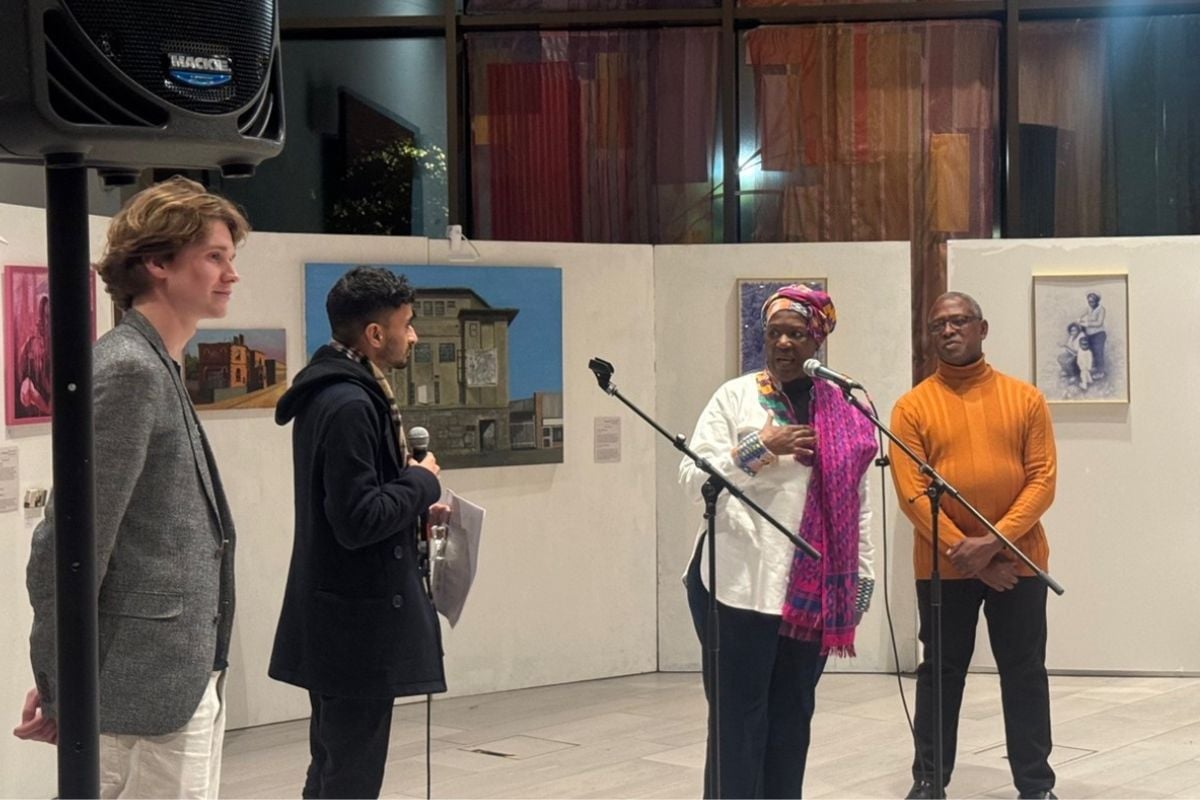
The work, on its own, had real power to inspire, but it was only by inviting the families, and Benjamin’s wife Qian, to speak about their experiences that we could truly understand the struggles and triumphs.
Despite the plight of the Windrush generation being widely publicised, the number of people I encountered who had little idea of the extent of the scandal was surprising. It was speaker Monica Brown’s words that hit home the lasting effects of such a tragedy as a barrier to social harmony. She said that, even after her victory in restoring her mother’s citizenship, she was anxious enough to “keep a suitcase half packed”.
Engaging the most alienated
To leave a lasting impact, we must complement exhibitions with events fostering connection and inspiration. The Ikon Gallery in Birmingham’s show Escape – a retrospective of artist Htein Lin – many of whose finger-painted canvases were created while a political prisoner in Myanmar in the 1990s and 2000s, provides a perfect example. Lin worked with high-security prisoners at HMP Grendon and their shared experience of incarceration enabled the creation of a wide variety of works from sculpture to portraiture, exhibited at the prison.
Collaborations like this help those most alienated in society come together and find shared connection and, in this instance, offer the public a different perspective of prisons and the incarcerated than they might see in the headlines.
Exhibitions are only the start
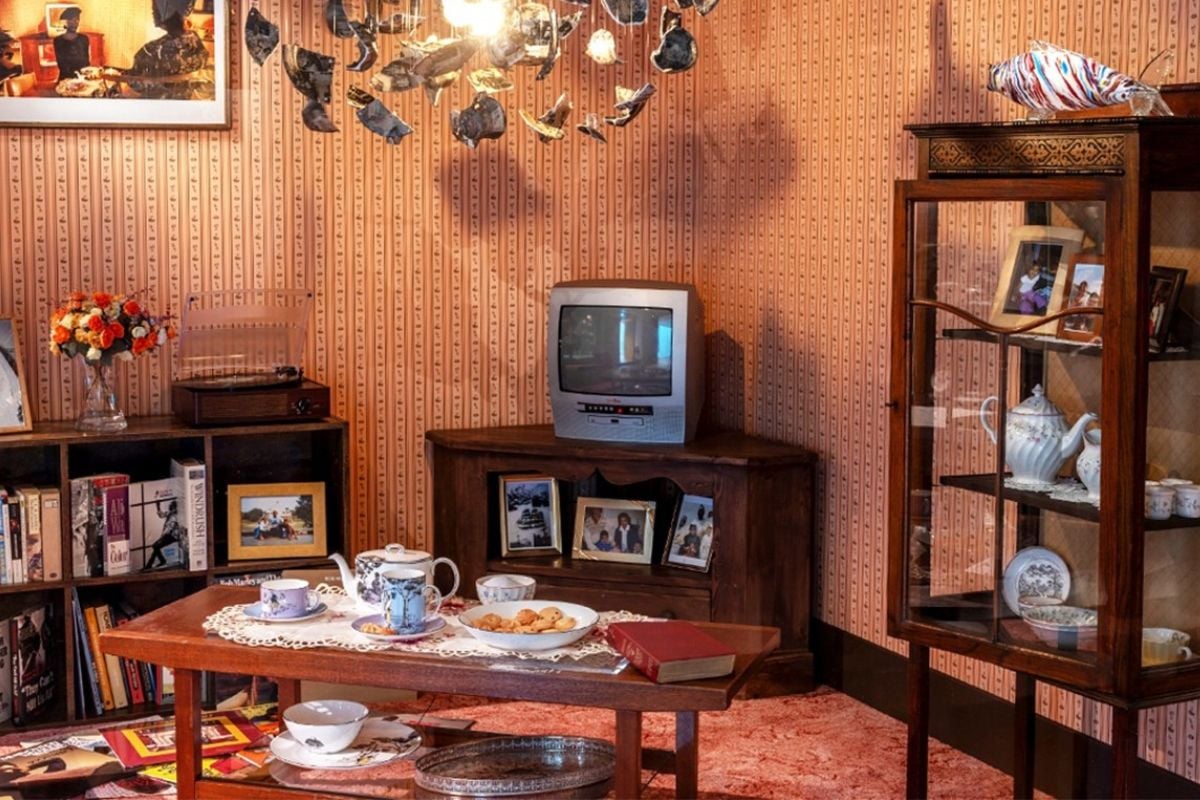
It’s not just temporary exhibitions that can help people to reconnect. Reinterpreting collections gives museums and galleries meaningful opportunities to reach out to communities. For example, the Ashmolean in Oxford created a new display, Shedding Light, in its European Ceramics gallery. The display recreates a Caribbean living room in the 1950s, created with the help of Oxford’s Caribbean communities, which contrasts with existing objects in the gallery, bequeathed by wealthy collectors.
Reframing collection displays with relevant stories for a wider section of audiences enables museums like the Ashmolean to represent their communities and make their spaces welcoming in a way they may not have been even a decade ago.
As they reckon with multiple challenges, museums and galleries have to reconnect with audiences in more unorthodox ways than before. We can’t simply organise exhibitions and expect a diverse range of communities to engage. Only if we see them as a starting point in a wider mission to bring people together can exhibitions be at the heart of social exchange across the country.
Join the Discussion
You must be logged in to post a comment.