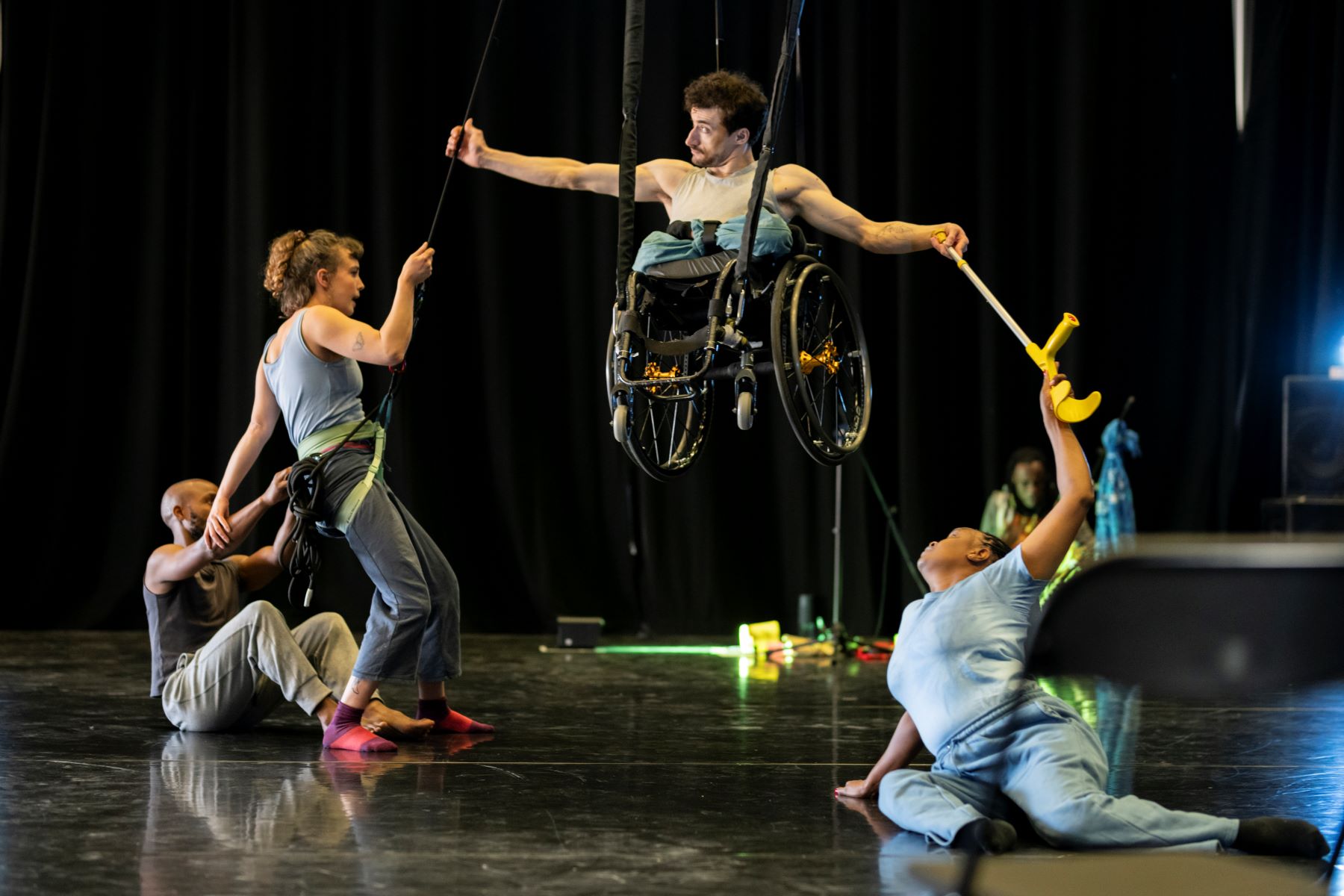
Earth, Wheels, Air is a collaboration between the UK’s circus company Extraordinary Bodies and Kenya’s leading inclusive contemporary dance company, Pamoja Dance
Photo: Paul Blakemore/Diverse City
Demystifying collaboration in the arts
From informal alliances to full mergers, Figurative’s chief innovation officer, Seva Philips, explores how collaboration can unlock a wealth of new opportunities for cultural and creative organisations.
The cultural sector thrives on collaboration, from artists working together to organisations sharing resources and expertise. Yet when it comes to formal partnership arrangements, many cultural organisations find themselves navigating unfamiliar territory. With increasing pressure on funding and growing competition, strategic collaboration has become not just beneficial but essential for sustainability and growth.
Over the last four months, we’ve been working with Eastside People – a strategic consultancy for not-for-profits – to produce a practical collaboration toolkit designed specifically for the cultural and creative sector in the UK.
Our aim? To demystify collaboration in all its forms, because whatever your goals – artistic, strategic or operational – collaboration has the potential to unlock new opportunities for cultural and creative organisations to achieve their strategic vision.
New things are possible when organisations that don’t normally work together, collaborate on a shared project. But it requires a clear vision of what you want to achieve, clear rules of engagement and governance, and a focus on the big picture and main objective, rather than focusing on the potential benefit for any one partner.
Toolkit: Five collaboration models
Our toolkit describes five different models of collaboration: Informal alliance, Contract-based alliance, Joint venture, Group structure and Merger. Of course, organisations must explore what they are seeking to achieve and why a collaboration could be the answer. The reasons could range from seeking economies of scale – particularly relevant in the challenging operating environment – and diversifying funding to improving the talent pool and knowledge and skills available.
An example: Diverse City and Cirque Bijou first partnered at the 2012 Olympic opening ceremony in Weymouth. At first, they worked together in an informal alliance – the loosest type – to pilot Extraordinary Bodies, which celebrates Circus for Every Body by devising performances that bring together and platform D/deaf, disabled and non-disabled artists.
But as their ambitions for the collaboration grew and evolved, so did the form it took. As the project gained momentum, they put a contractual agreement in place which allowed them access to higher levels of funding to take Extraordinary Bodies to the next level.
Joint ventures bring organisations considerably closer to each other through pooled resources, shared costs and risks. The Arts Impact Fund, the first impact investment fund for arts and culture organisations in the world, which is now managed by Figurative, originated as a joint venture in 2015.
Nesta – the UK’s innovation agency for social good – teamed up with Arts Council England, Esmée Fairbairn Foundation and Bank of America to launch the Arts Impact Fund (AIF) pilot, providing unsecured loans of between £150,000–£600,000 to the cultural sector. Figurative is now building on the legacy of that work as an independent not-for-profit supporting the cultural sector through impact, investment and innovation.
Group structures offer the closest level of collaborative partnership without full integration of two organisations into one. This structure involves a significant amount of time and money in the process, which should include a comprehensive due diligence exercise.
Finally, there are mergers – permanent structural changes where organisations fully integrate with each other, shedding their separate identities in the process. This enables full integration across all areas of governance and operations, bringing the potential for the most significant benefits, efficiencies and cost savings of all the collaboration models.
As an example of this type of collaboration, following a five-year process, Dance4 and DanceXchange, two prominent Midlands-based dance development organisations merged in August 2022 to form FABRIC. In the lead up to the merger, both were operating in an increasingly competitive environment, where public funding was stagnating and it was becoming harder to find opportunities, resources and interventions to nurture dance artists and bring their work to the public.
As Paul Russ, former CEO of Dance4 and current CEO of FABRIC noted: “It took more time to be competitive, than it did to have open conversations about working together.”
Can we afford not to collaborate?
Each type of collaboration comes with its own unique set of risks and challenges, which range from losses of autonomy to significant investments of time and money. Like any other type of partnership – professional or otherwise – successful collaborations are based on trust. But at a time when the arts have never faced so many challenges, the real question is, can we afford not to collaborate?
You can download Figurative’s free toolkit, designed to help arts and cultural sector organisations navigate the process, and which clearly explains all the different types of collaborations, with real-world examples and simple lists of pros and cons.
Join the Discussion
You must be logged in to post a comment.