
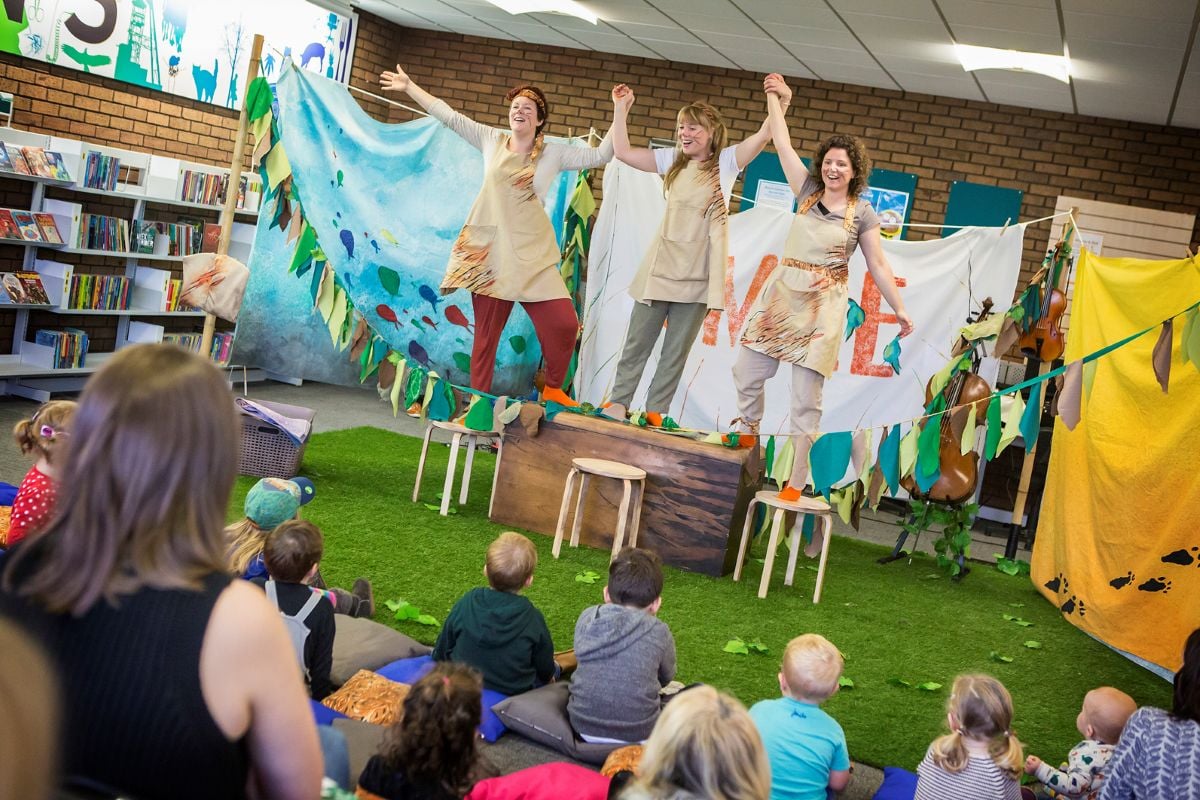
MishMash Productions: Smile
Photo: Pamela Wraith Photography
Building the next chapter for the Centre for Cultural Value
Stephen Dobson and Liz Harrop of the Centre for Cultural Value discuss their next steps after securing ‘the rare gift of stability’- thanks to confirmed multi-year funding.
Across the UK, cultural organisations are navigating tightening resources and rising expectations. Freelancers are juggling multiple roles within fragile and disconnected ecosystems. New place-based policies are reshaping local landscapes in ways that feel full of promise, yet frustratingly uneven. There is a growing demand for evidence and evaluation, but those asked to provide it are often the organisations with the least infrastructure, time or support to do so fairly or meaningfully.
Over the last six years, the Centre for Cultural Value has worked in this space: translating research into practice, making evaluation feel useful rather than burdensome, and convening conversations that help the sector reflect and adapt.
In our previous article, we reflected on what we had learned. Now, we look ahead to what comes next, and how we hope to help build the systems and capacity that cultural practitioners say they most urgently need. With recently secured core funding from the University of Leeds School of Performance and Cultural Industries through to 2029, the Centre has been given the rare gift of stability.
Head of the school, Professor Jonathan Pitches, said the funding would enable the Centre to “continue to deliver much-needed work that informs cultural policy and directly supports cultural organisations, policymakers, funders, artists and researchers across the UK and internationally.” Reaching this milestone has been made possible by the transitional funding provided over the past year by Esmée Fairbairn Foundation and Paul Hamlyn Foundation, whose continued support strengthens our ability to plan ambitiously and collaboratively.
Our vision for the next three years
Over the past year, as we listened to organisations, policymakers, freelancers and community partners, the message was clear: people want stronger support, better data infrastructure and approaches to evaluation that are collaborative, equitable and rooted in place and the realities of cultural work. These conversations have shaped our vision for 2026–29.
Practitioners told us they want to build skills without feeling overwhelmed and develop evaluation that supports rather than stifles purpose. Policymakers emphasised the need for more robust, connected evidence, while organisations highlighted the challenge of linking everyday practice to national conversations. The next three years will focus on building the infrastructure, training and partnerships that help practitioners and policymakers collaborate, creating a sector where evidence genuinely serves people.
What has emerged is a vision grounded in practical relevance and long-term benefit. We aim to enrich lives by building an equitable, confident and sustainable cultural sector, one where creative place-shaping is community-led, robust cultural data strengthens decision-making, and resilient models of practice support a thriving future.
This refreshed vision underpins our commitment to helping organisations and freelancers develop the tools, evidence and confidence they need to navigate complexity.
A structured approach
Our vision unfolds across three intertwined areas of activity:
- Creative place-shaping and community-driven development
We will continue to model approaches that illuminate new ways of understanding cultural value, including through our recently launched Cultural Vitality Labs. These labs bring practitioners, communities and researchers together on equal footing to explore how community voices can shape meaningful indicators of cultural vitality, moving beyond narrow economic or health-focused measures toward those that resonate more deeply with lived experience of culture. This work will show how cultural activity fosters resilience, especially in communities facing change.
Looking ahead, we will deepen these partnerships by developing a network of regional hubs where practitioners, researchers and communities can test new approaches to data and evaluation in real-world settings. Our aim is to create research and learning projects across the UK that help people articulate what culture means to their communities in ways that chime with residents and local decision-makers. For practitioners, this means evidence which reflects nuance, research which honours community knowledge, and practical resources which support programme design, storytelling and evaluation.
In short, it is about helping people shape the narrative of how and why culture matters, grounded in the realities of the places they know best.
- Strengthening cultural data
The Centre has become a trusted source of guidance on evaluation and reflective practice. But evaluation is only meaningful when it is accessible, collaborative and grounded in people’s needs. Over the next three years, we will expand this work significantly through the development of the Evaluation Academy, a national professional development programme offering cohort-based learning, mentoring and policy masterclasses.
Learning drawn from both the Evaluation Academy and the Cultural Vitality Labs will shape the development of the National Cultural Data Observatory (NCDO), a programme that will work with the sector to establish clear data standards, ethical guidelines and responsible governance; develop tools and shared methods that support better data collection; and create accessible insights that build confidence around data use.
Working with partners across the UK, the NCDO will convene conversations and champion inclusive approaches, ensuring diverse contexts and underrepresented voices shape an ethical, inclusive and coherent data infrastructure for cultural work across the UK.
- Supporting sector resilience
The Centre’s next chapter is not simply a strategy update; it is a commitment to the people who shape cultural life across the UK. We will continue to work directly with organisations to help them use research and evaluation to strengthen and sustain their work, understand what’s effective, identify what needs to shift, and explore new opportunities.
Joining the conversation
This work will only succeed if it continues to be shaped with, not for, the sector. A future shaped collectively is one where cultural value can be understood and nurtured and sustained for everyone. We invite organisations, freelancers, policymakers and researchers to join us in building this next phase.
Join the Discussion
You must be logged in to post a comment.