
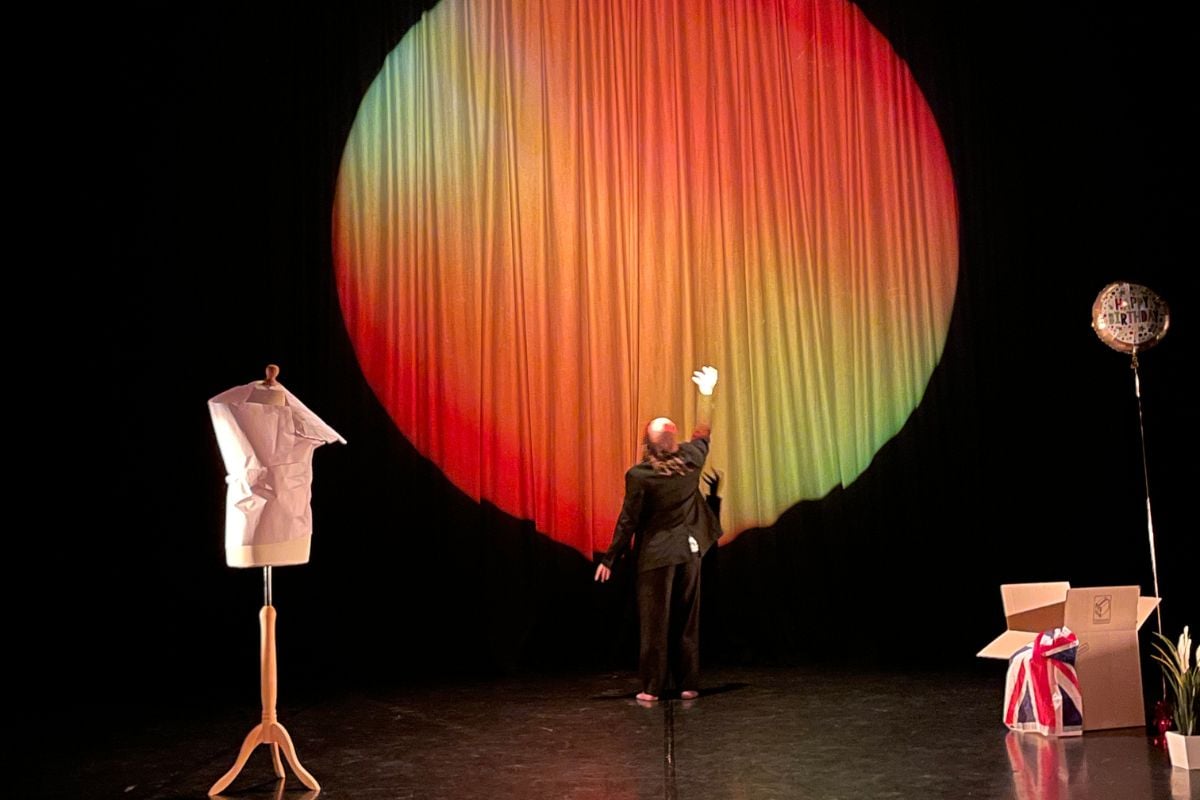
Nick McKerrow in performance with Anjali Dance Company, one of the organisations to take part in Keep Moving
Photo: Anjali Dance Company
Tremendous potential: Matching opportunity to appetite within inclusive dance
Keep Moving is a project designed to advance disabled leadership and champion inclusive participation. Becky Bailey of Fabric, a strategic dance development organisation based in the Midlands, reflects on how the programme has shaped artistic practice and participating organisations.
Keep Moving has become the ongoing legacy programme of Fabric and the Dance Leaders Group, an independent network of dance professionals and leaders across the Midlands. It grew out of the success of Critical Mass, a dance and movement initiative commissioned as part of the Birmingham 2022 Commonwealth Games, delivered with the Dance Leaders Group and produced by Fabric.
Critical Mass brought together 242 young people aged 16 to 30, both disabled and non-disabled, in one unified dance cast, performing at events including the Commonwealth Games Opening Ceremony at the Alexander Stadium and the Birmingham International Dance Festival.
Building the future of inclusive dance
In its wake, Fabric partnered with United by 2022, the Dance Leaders Group network, and a range of Midlands delivery partners to build on that momentum. We wanted Keep Moving to focus on three connected strands: inclusive participation, platforming and showcasing, and artist development.
Bringing on board partners including Black Country Dance Hub, Dancefest, Belgrade Theatre, and more, we supported organisations throughout the region to continue offering inclusive, regular dance opportunities for young people.
The goal was twofold: to ensure a sustainable future for accessible dance and to challenge perceptions of disability across the arts.
Spotlighting talent
Following on from the major cultural events that were the Commonwealth Games and Festival 23, we identified a gap in opportunities for groups to share their work. In response, we decided to develop a performance strand, providing improved access to existing platforms and several new opportunities, to make sure groups could keep celebrating their achievements by presenting them to audiences.
Highlights of this work included a performance by Linden Dance Company’s Keep Moving group, at the city’s largest free arts festival, Birmingham Weekender; That!Dance’s Why I Dance film and photography project, exhibited at the Brewhouse Arts Centre between March and April this year; an inclusive sharing in Coventry with Belgrade Theatre, Moving Space Co, and Ascension Journey; and the premiere of Future Shift’s The Big Rift at the Applause Youth Dance Festival, presented alongside other Keep Moving dancers.
Trust, dialogue, and flexibility
The Keep Moving artist development programme wanted to make greater strides for disability inclusion in the Midlands’ dance scene. Two co-designed residencies, delivered with Motionhouse and Anjali Dance Company, allowed us to place disabled artists at the centre of professional creative environments, opening pathways to leadership and employment. These residencies were designed not as adaptations of existing models, but as fully integrated, equitable structures built on trust, dialogue, and flexibility.
The first residency offered Anjali company dancer Nick McKerrow the opportunity to work in close collaboration with choreographer Gary Clarke and artistic and access advisor Rachel Liggitt. Following Nick’s Developing Your Creative Practice (DYCP) Award from Arts Council England, which helped him explore his transition from performer to choreographer, this studio-based opportunity focused on the creation of Nick’s first autobiographical solo work. Nick has since secured a Liberty Festival R&D grant (2025), been shortlisted for the Unlimited Open Awards, and continues to seek further funding to premiere and tour his work.
The second residency supported artist Sander Verbeek to shadow Motionhouse’s artistic director Kevin Finnan and associate director Daniel Massarella during the creation of Hidden, the company’s latest touring production. Sander gained insight into how a touring production evolves from concept to premiere, and is now applying for new roles and funding while maintaining professional connections formed during the residency.
The talent is here – it’s up to the sector to keep pace
The residencies reaffirmed what we already know: the talent exists, the ambition is here, and the potential is tremendous. Now the sector must respond with sustained commitment, meaningful resources, and the courage to transform how disabled artists are supported. Fabric and the Dance Leaders Group remain dedicated to advocating for progression routes and championing collaboration. Our door is always open.
Moving forward, we will continue working with regional partners to refine inclusive models such as the artist development programme, strengthen pathways into dance careers both inside and beyond formal education, and share key learning to address inequity across the dance workforce.
Join the Discussion
You must be logged in to post a comment.