
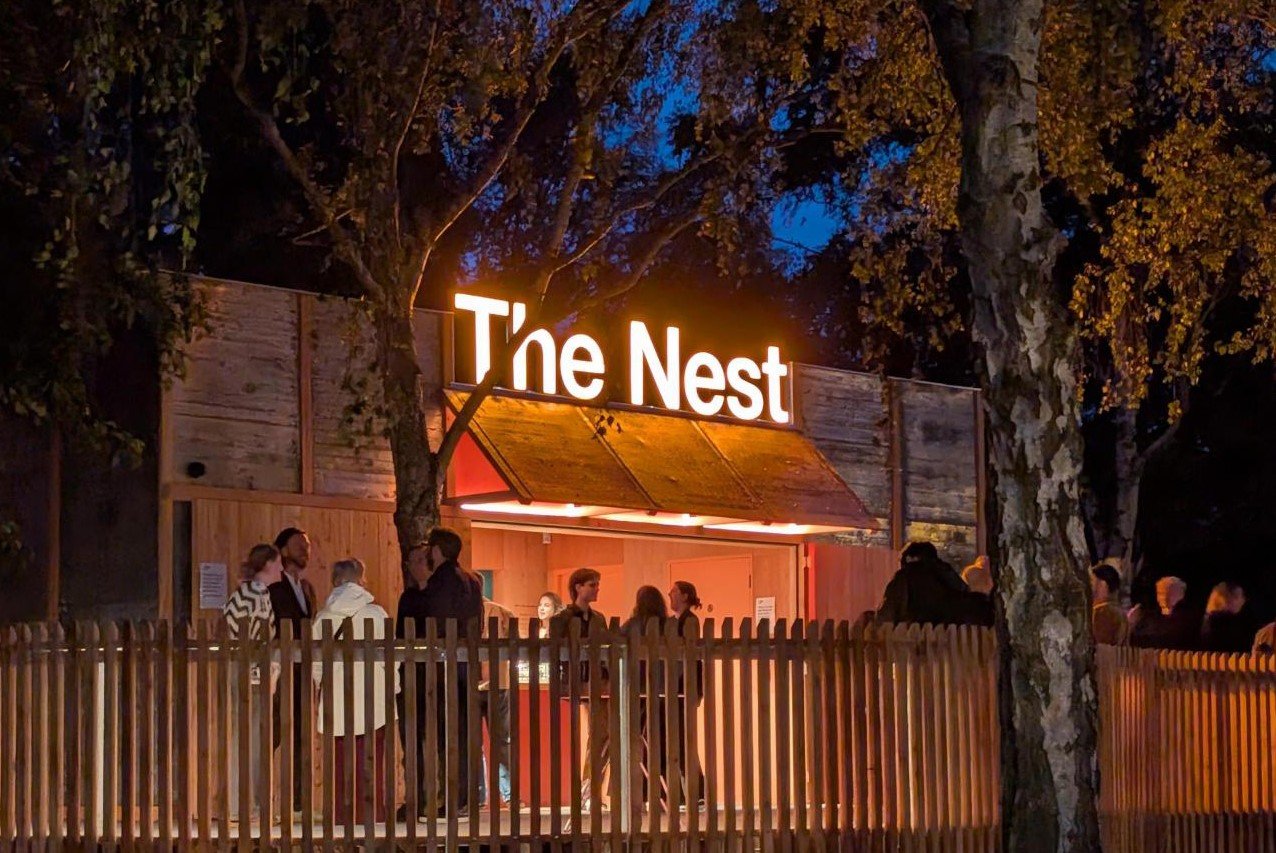
The Nest at Chichester Festival Theatre offers a rethink on how theatres can serve their communities
Photo: Tim Hills
The Nest: Infrastructure matters, but ethos more so
At Chichester’s newest venue, values are leading the vision, says Dan Hill, producer for The Nest.
At a time when the performing arts sector is tackling both the climate crisis and a growing and necessary call for inclusion, The Nest, a new 120-seat fringe-style venue launched this summer by Chichester Festival Theatre (CFT), offers a rethink of how theatres can serve their communities, support emerging talent and minimise environmental impact.
This isn’t just another black box studio or fringe pop-up. It’s a deliberately crafted ecosystem, one that values people as much as performance.
Since the early days of CFT, temporary spaces for experimentation, innovation and inclusivity have played a key part in its success. From The Tent that preceded the Minerva Theatre to Theatre on the Fly and the Spiegeltent. CFT has long recognised the need for an artist-led space in Chichester that could nurture early-career creatives, engage new audiences and operate with sustainability at its heart.
So, when the rare chance presented itself to acquire a flexible pop-up venue originally commissioned by The Pleasance and previously used in London and Edinburgh, it was one we couldn’t ignore. But rather than simply acquire a structure, we decided to build a different kind of cultural space altogether.
Born from opportunity… and intention
The Nest was born not just from opportunity, but from intention. A venue shaped by listening – to artists, to communities and to the environment. At a time when arts organisations are reckoning with how to stay relevant, inclusive and responsible, The Nest offers a model of what’s possible when values lead the vision.
The vision emerged from a growing awareness that supporting early-career artists and local communities can’t be separated from broader questions of sustainability. CFT wanted to create something truly systemic: a space that functions as a launchpad for bold creative ideas, while also lowering barriers to access and fostering long-term relationships.
The result, we hope, is a vibrant venue designed to empower artists, technicians and community partners alike. The Nest prioritises low-cost access, low-carbon infrastructure and, as much as possible, local programming.
The Nest is about investment, not in sets and ticket sales, but in people. It’s home to our Future Theatre Makers programme which supports a cohort of emerging creatives with bespoke mentoring, development space, access to networks and CFT’s infrastructure, and meaningful opportunities to take risks. They’re not just given a stage; they’re invited into a long-term relationship that prioritises process over product.
Shaping our artistic community
The venue also serves as the base for Creative Connections, a free-to-access network for artists from across Hampshire and Sussex. Through scratch nights, open mics, collaborative workshops and curated feedback events, local creatives are given the tools and encouragement to shape their own artistic community. It’s artist-centred infrastructure that’s deliberately slow-growing and nurturing, an antidote to the fast-turnaround, output-focused culture many freelancers have grown weary of.
We are also training the next generation of technical theatre-makers with real-world experience. 16-25-year-olds are given hands-on access to sound, lighting, rigging, AV and stage management opportunities, alongside professional mentoring and training that encourages environmentally-conscious working from the outset – helping to shape a more sustainable creative workforce behind the scenes.
Importantly, this approach goes beyond programming. Development space is offered flexibly and for free, with built-in support including technical advice, industry connections, mentoring and accommodation. This creates a low-pressure, high-trust environment, something essential for nurturing work that dares to think differently. At its heart, The Nest is artist-led, not as a buzzword, but as a practice.
Continues…
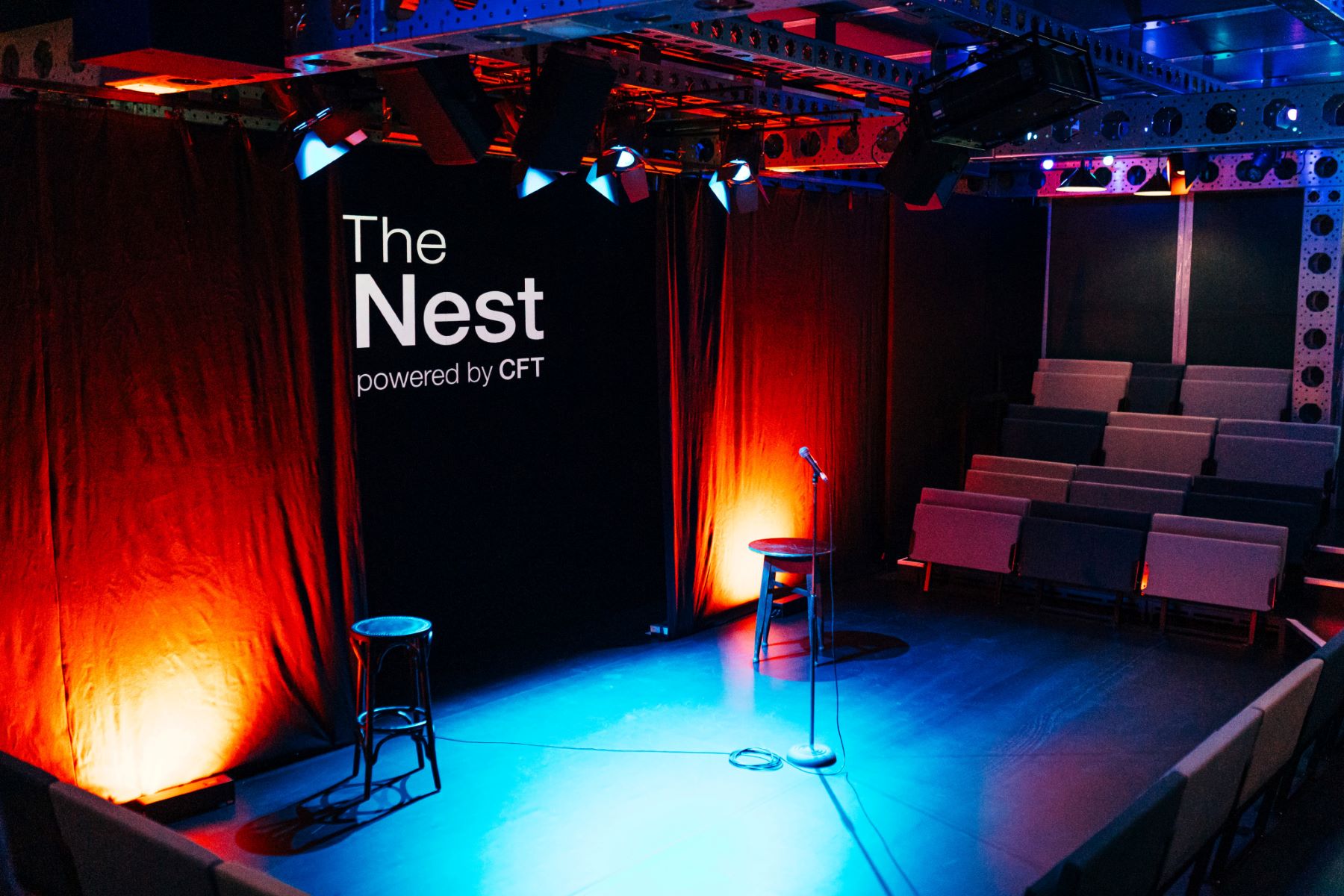
The Nest auditorium. Photo: Tim Hills
A space for experimentation
Equally important is how we meet audiences. The Nest was created not to duplicate what happens in the 1300-seat Festival and 300-seat Minerva Theatres, but to offer something new: a space for experimental work, live music, spoken word, stand-up, family theatre and more.
We’re focusing on reaching younger and more diverse audiences: university students, experience seekers and local families with young children – groups that traditional programming can sometimes miss. The vibe will be intimate, informal and relaxed, with a bar and unreserved, comfortable bench seating.
And we listen. If a particular format connects, we grow it. If something feels out of step, we adapt. This responsiveness is key in building a venue that feels open, vibrant and genuinely community rooted.
Local groups can also hire The Nest affordably for rehearsals, exhibitions and events, making it a shared civic space as well as an artistic one. It’s a venue designed to be used, not just visited.
A willingness to listen
The Nest is still young, but it’s already taught us a great deal. Chief among those lessons is that change doesn’t have to start with a grand strategy. Sometimes it starts with a conversation, a community and a willingness to listen.
Yes, infrastructure matters. But perhaps even more important is ethos. What The Nest teaches us is that the real work of sustainability is about building systems that help people belong, create and thrive for the long term.
We were lucky the chance to purchase the Pleasance venue came when it did. But the real opportunity has been in what we’ve done with it. The Nest is more than a new stage; it’s a new way of working. Responsive. Relatable. Relaxed. Rooted.
And perhaps, in a time of uncertainty and change, that’s exactly the kind of space we need to be making.
Join the Discussion
You must be logged in to post a comment.