The technology sector is reshaping futures at extraordinary speed
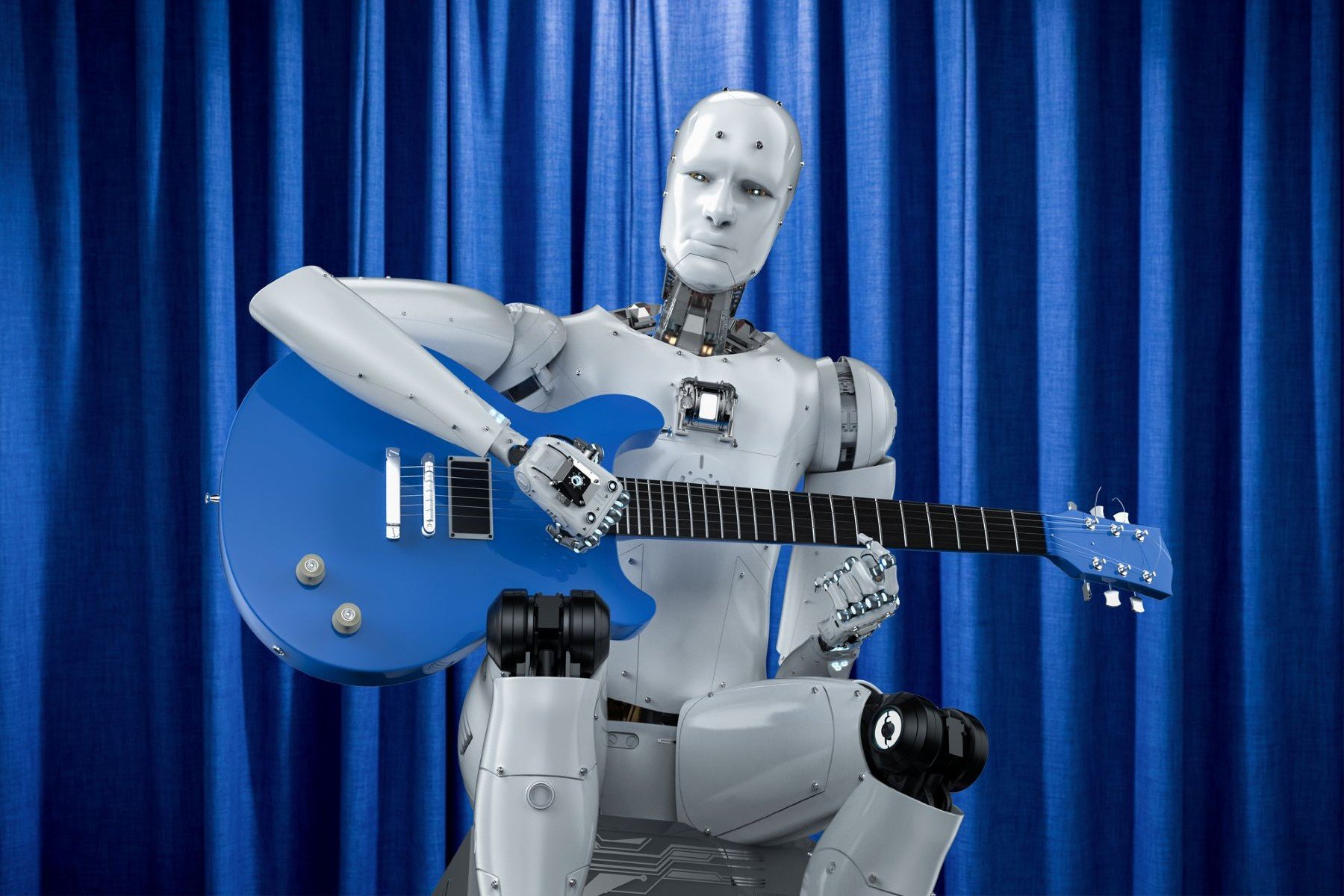
Photo: Phonlama/iStock
Does tech need the arts more than the arts need tech?
Across the UK, there’s growing pressure to respond to new technologies. Hassan Vawda, a researcher at Goldsmiths, University of London, explores how the sector can do that responsibly.
Speaking on Radio 4 as part of his guest-edited Today programme, Mustafa Suleyman, CEO of Microsoft AI, stressed the importance of a healthy fear about AI development.
It made me think less about the technology itself and more about the language being used. Fear. Responsibility. Ethics. Uncertainty. Morality. These need to be seriously considered if we are to be prepared for a future of machine learning.
But they are not foreign concepts to the arts. They are at the core of creativity that the cultural sector has long aimed to champion, sustain and share.
Debate risks obscuring something more fundamental
Across the UK’s cultural ecology – from national museums to local theatres, from community art centres to artist-led studios – there is growing pressure to respond to AI and new technologies.
But how do we adopt them responsibly? How do we stay relevant? How can efficiency be increased? These questions are now familiar but they risk obscuring something more fundamental: the arts’ long, if increasingly under-valued, relationship to mediating and to the human, ethical and spiritual dimensions of public life.
My own research on religion and belief in cultural policy sits in this gap. The arts have always leaned into exploring ideas around transcendence, ethics, mortality, care, inheritance and speculating the future. Yes, increasingly, we fail to record them as aspects of value in the cultural ecosystem.
Instead, the justification for culture in policy, funding and governance circles has broadly been on social, health, educational and economic benefits, particularly in the UK. My research focus has been on developing a framework through religious literacy, to better measure, value and invest in the impact of the arts in mediating beliefs and bringing spiritual sanctuary to a society of diverse and increasingly polarising viewpoints.
Need to articulate the value of the arts
What becomes clear is not that the arts lack this ethical or spiritual capacity, but that they struggle to claim it as a legitimate form of value. Though these dimensions circulate through artistic practice – in exhibitions, performances, commissions and participatory work – they rarely spoken about with confidence, resourced with intent, or embedded into institutional strategy.
Belief is present but treated as incidental; ethics are evoked but left diffuse. The result is a sector that carries profound questions about meaning and responsibility thanks to the artists, while institutional structures often lack the language, frameworks or permissions to name this work as central rather than supplementary.
This hesitation matters when we consider AI. At present, the exchange between technology and culture is uneven. Arts organisations are encouraged – and often required – to respond to technological change. To integrate tools, adapt workflows, and demonstrate innovation.
What is less developed is the reciprocal relationship: sustained engagement from the AI and tech sectors with the cultural spaces already skilled in holding ethical tension, moral uncertainty and questions of belief. If AI development is accompanied by a necessary fear, then the arts are not peripheral partners in this conversation. They are laboratories for precisely this kind of societal work, deserving of philanthropic support from booming tech industries.
The arts have a responsibility too
The arts sector also has responsibility. It is not enough for this work to remain implicit, sensed only by those already attuned to it. If cultural institutions are to function as ethical and spiritual interlocutors in a period of accelerated technological change, they must develop greater confidence in recognising, articulating and legitimising this dimension of their practice.
This is not about turning cultural spaces into sites of belief, but about acknowledging that questions of value, meaning, fear and responsibility are already central to how art is made, encountered and debated – and deserve to be held with intention rather than left unspoken.
This is not a rejection of AI, nor a nostalgic defence of the arts. It is a call for mutual reckoning. The technology sector is reshaping futures at extraordinary speed. The arts have long helped societies reflect on what those futures ask of us ethically, socially and spiritually. But that contribution only carries weight if it is named, supported and taken seriously – not as an accessory to innovation, but as a form of cultural knowledge.
The question now is not whether the arts can keep up with technology, but whether we can recognise the work artists and cultural spaces already do in responding to this change. Without that self-recognition at institutional level, the sector could risk being irrelevant in the debates on what an AI future can mean, despite having the most piercing tools in its ecosystem to explore this meaning: artists.
Join the Discussion
You must be logged in to post a comment.