
The conversations weren't just enriching, they were revelatory
Conversations on creative climate leadership
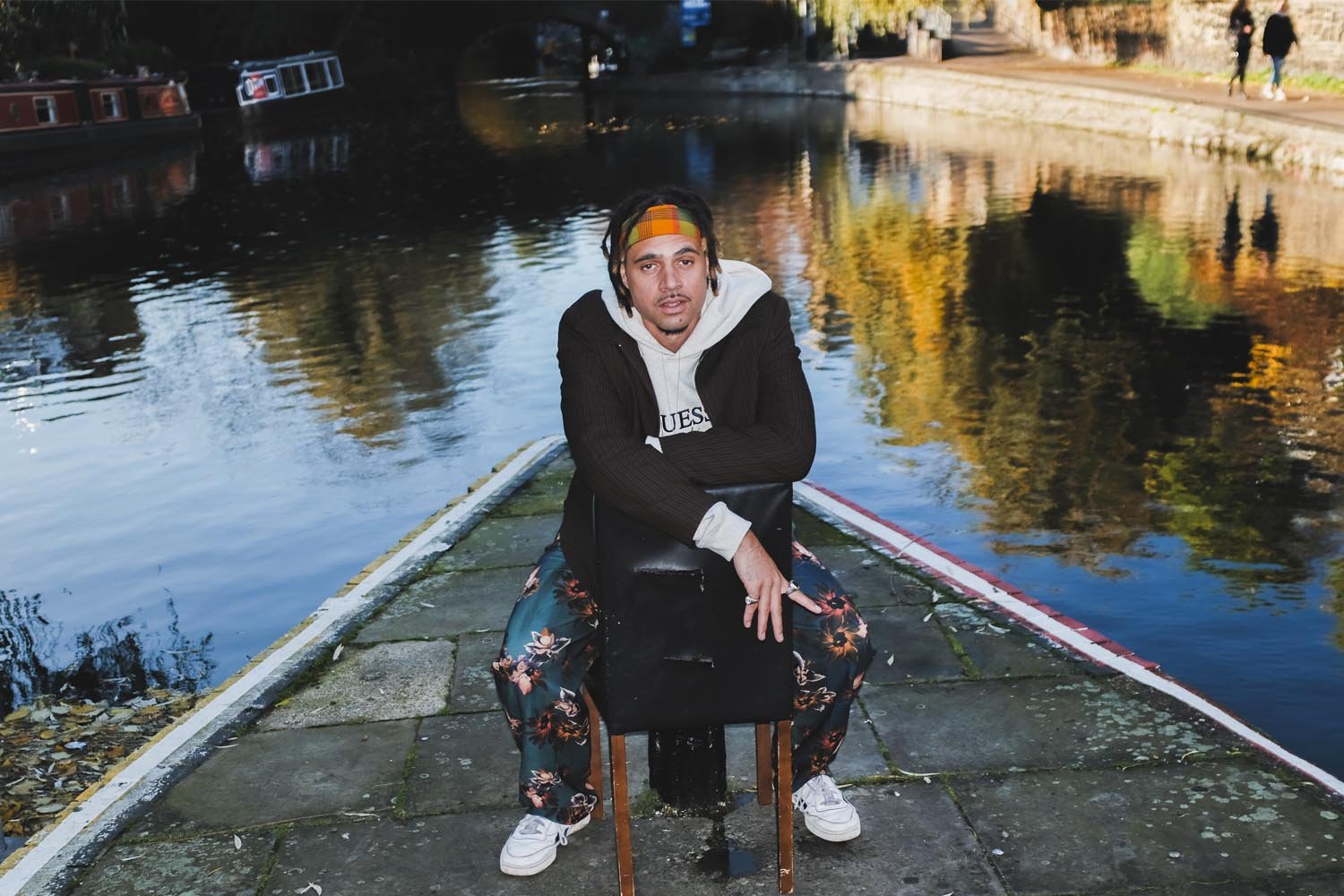
At the invitation of Julie’s Bicycle, artist, zoologist and presenter Louis VI has been co-hosting a podcast to explore what climate leadership looks like, with some striking results.
The music I share as an artist and the natural world I obsess over as a zoologist are inseparable. They’re one. The same. I’ve increasingly become an advocate for that thinking; that the more-than-human life that surrounds us isn’t just something for musicians, artists or poets to gaze on. It is us, and we are it.
I’ve also discovered that refreshing people’s perspective on this stirs something powerful within them, an ancient memory maybe. And I say ‘refresh’ because this isn’t groundbreaking stuff. In fact it returns to the kind foundational thinking often held by indigenous communities. It’s deep, old knowledge. In modern times, that connection has been obscured and relegated.
At the same time I have been swept along witnessing the horrors of the current age unfold. The decisions being made don’t seem to be in the interest of citizens. Quite the opposite: they’re about multiplying the power and wealth of a few. But what about the thriving majority? Facing this – like many people – it’s easy to feel helpless.
Challenging commonly accepted notions
In times when inequalities and established systems seem so entrenched and so blind, alternative pathways are difficult to envisage. I mean, look around, the leadership we have isn’t serving our best human interests, right? Add to that, all our plant and animal neighbours? And what about the best interests of the delicate planetary life support system that keeps us all breathing under one atmosphere?
And so, this spring I spent a dedicated chunk of time thinking about leadership. In turning over that stone, it revealed some massive questions. If the current set-up isn’t working, what do we need? How could a different leadership show up in our communities, organisations and decision-making spaces? What does good leadership look like?
It led me to a point I wasn’t anticipating: to challenge the commonly accepted notion of what leadership might be and ask if it is even the right word to use to describe what we need? I did this by speaking to people. A leader implies something that is individual and non-collective and I think we need to move far away from individualism to create the beautiful future we all deserve.
Underappreciated power of leadership to unlock change
Julie’s Bicycle invited me to co-host a new podcast mini-series Conversations on Creative Climate Leadership. For almost 20 years, the organisation has been advocating for arts leadership – and its chronically underappreciated powers to unlock change.
We reached out to contributors from every corner of the world – from Norway to Canada, Australia to Ethiopia – to hear how their work is practising leadership. And it wasn’t just enriching, it was revelatory. Together the contributors made a compelling case for how art and culture hold the key to so many of our commonly held problems – including climate change.
The experience showed me how play and humour can help us navigate the most stigmatised and complicated topics. It served as a reminder that humans are not rational, logical beings. We make decisions based on emotions and feelings. And what makes us feel? Art and culture, of course.
These conversations also taught me about balance. To have planetary health doesn’t mean exploring and conquering every last corner – some places live in harmony without human intervention. And it taught me about prioritisation. What do we truly value?
Fundamentally, it seems a kind of sickness that fresh air, clean water and abundant nature aren’t ranked as most important. It made me think about participation in leadership – people are too often only invited to share, not to shape – and about the unheard voices in climate solutions – those not granted permission to be part of the solutions. We need them!
‘Linked to a crisis of apathy’
All contributors brought a unique dimension to the topic. These were a few that resonated.
“Leadership is contextual. It looks different for every different context. What’s right somewhere is wrong elsewhere. We can’t be prescriptive about what works. For example, the Western, white leadership model is really competitive. I don’t necessarily think leadership needs to be competitive. It’s about finding harmony.”
Guy Ritani – artist, activist and permaculture teacher (episode 6)
“It’s an interesting time to revisit that word leadership because it’s so linked to our crisis of apathy. Under our current economic regime, where individualism is rife, it’s beaten into all of us. It’s beaten into me. From talking with lots of apathetic people, there’s this idea that ‘I can’t change the world, so there’s no point in trying’. But the whole point is collective. If I focus on the little bit, my little bit around me, with the people I’m connecting with, and build that out slowly, from the grassroots…”
Zoe Rasbash – researcher, writer and programmer (episode 5)
“There is a need to make that conversation accessible, because otherwise you do not want to have it. And humour and play are so important, in a way, to allow people to be able, to be comfortable, to come into that space with you.”
Toby Peach – theatre maker and experience maker (episode 1)
An opportunity, a commitment, an invitation
And so I invite you, if you’re feeling helpless, to consider where leadership is in these times when it feels so lacking. How do we connect changemakers working across different art forms and in different roles around common purpose and mutual support?
For me, it’s an opportunity, a commitment and an invitation to us all – wherever we are in the creative ecosystem – to bring our best to this growing mobilisation of creativity at the heart of action on climate. It’s about finding your own way to be a part of this. We can all contribute. I leave you with this guiding thought from Zoe Rasbash:
“We all have to be leaders. There isn’t time for everyone to be like ‘no, I’m not a leader’. We have to have a more collective, holistic and iterative understanding of leadership. We all have to step into our power, look at what’s around us, look at our resources and try to make the best of that.
“Do whatever form of leadership feels comfortable to you. Everyone alive on earth right now is important because it’s the most important time in the history of the planet, one in which we have the power to not just avert crisis but create a phenomenal, fairer, future-filled world, better for all organisms and Earthlings, not just humans.”
Join the Discussion
You must be logged in to post a comment.