
A framework for inclusion
The launch of an Inklusion Guide in 2022 offered something rare in UK publishing: a practical, free and disabled-led framework for improving access to literary spaces. Three years on, Haneul Lee thinks it’s time for the industry to recognise the cost.
As the guide approaches its impact launch at this week’s Edinburgh International Book Festival, its influence is visible, with festivals, publishers and authors adopting its principles to reshape how access is considered across the sector.
It’s a significant intervention: a sector-wide access guide written by and for disabled people, co-created by Julie Farrell and Ever Dundas. But its existence prompts a deeper question: why did it fall to two disabled creatives to build what the industry lacks?
In a wider context of closer attention on welfare reform and inclusion, in the arts too access is increasingly part of the conversation – in funding bids, recruitment and panel events. But the burden of turning good intentions into infrastructure still often falls to those least resourced to do so.
Disabled artists frequently end up researching, advising and implementing access measures, often with little pay, support or protection from burnout.
Hitting a wall
The Inklusion Guide was born of that reality. “I was constantly invited to events with no mention of access,” Ever Dundas says. “The back and forth with organisers: do you have this; can you provide that? It’s just exhausting. It’s like disability tax.”
Together, Julie and Ever raised £36,500 from 22 sponsors to research, write and publish the guide; less than what many publishers spend marketing a single title or staging one flagship event. “We delivered the project on half the usual budget,” Julie tells me. “I wouldn’t recommend it as a model.”
After years of flagging the same barriers and hearing similar stories from peers, Ever hit a wall. “Why is nothing changing? I never got a decent response. So, I thought, fine. I’ll do it myself. I didn’t even want to.”
That reluctance wasn’t about a lack of belief in the work, but about cost. “It took away two years of my creative life,” she says. “You spend so much time advocating, and that’s time taken from making art.”
Creative burnout
Julie Farrell is similarly candid about the toll: not just creative burnout, but the emotional strain of navigating organisations that say all the right things while failing to meet even basic needs. In one case, a well-funded organisation refused Julie a simple access request after inviting her to talk at a disability and inclusion panel, while publicly citing the guide as a resource.
That toll was also personal. Just days before the guide’s launch, Julie’s father died. His pride in the project and the pain of not seeing it reach readers only deepened the emotional cost. Julie took a year off to grieve and care for her mother. There was no institution to carry the work forward.
Still, the response to the guide was immediate. “People said, ‘This looks great, but where’s the checklist?’” Julie recalls. “We didn’t want a best practice checklist because people wouldn’t read the guide.”
Instead, the design is ADHD-friendly, visually clear and deliberately non-corporate: illustrations, colour coding, headings. It avoids siloing access into a single page and instead threads it through every part of the process, a shift that benefits everyone.
Julie adds, “I’ll be speaking about this again at the Edinburgh Book Festival. It’s going to be lovely to be back on the mainstage, almost exactly three years later. ‘Hey guys, remember me? I’m back to say it worked.’”
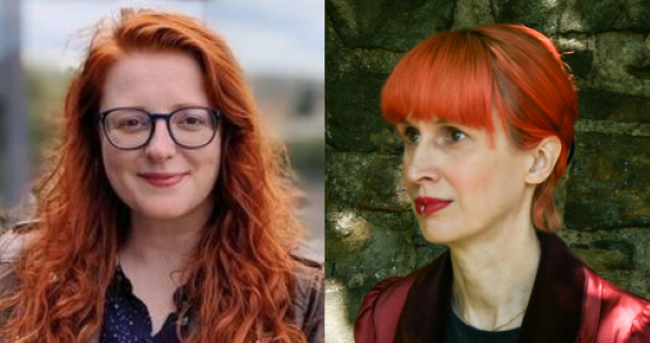
Why did it fall to two disabled creatives to build what the industry lacks?(l to r) Julie Farrell and Ever Dundas
Emotional labour
But their story isn’t unusual. Across the arts, disabled creatives are often expected to do two jobs: making creative work alongside making the sector accessible enough for it to exist. They do it with fluctuating health, minimal funding and the knowledge that if they don’t, no one else will.
This labour is emotional as much as logistical. Disabled artists are regularly asked to convince others that access is worth it – to frame it not as an add-on, but as a foundation for sustainability of the sector. That, too, is work. It’s rarely paid.
Lived experience is expected to lead access reform. But without institutional support, that reform displaces creative time, drains capacity and pushes people out. Institutions often congratulate themselves for ‘listening’ without examining what it costs to be heard.
Measuring the cost
Disabled creatives are building the infrastructures others take for granted. The assumption remains that if anyone cares enough to fix things, it’ll be those most affected. And if they can’t keep going, it’s framed as individual burnout, not structural failure. Advocacy becomes emotionally depleting, and when artists are building the stage, there’s little time left to stand on it.
It’s an inequitable model, and it compounds inequality in a sector where disabled artists already face higher costs of living, fewer opportunities and significant funding disparities. Scope estimates disabled households face additional monthly expenses of £1,095. In the arts, disabled creatives remain underrepresented in funding, touring and leadership – even as they’re asked to ‘fix’ the system.
The Inklusion Guide has shown what’s possible. But true inclusion means more than citing resources or building ramps. It means redistributing the labour, funding the work, and respecting the creative lives behind it. The guide’s legacy must be more than applause. The publishing industry, and the wider arts sector, must ask: What does it cost disabled artists to build the infrastructures others take for granted?
And when access work becomes indistinguishable from survival, what kind of sector are we building?
Join the Discussion
You must be logged in to post a comment.