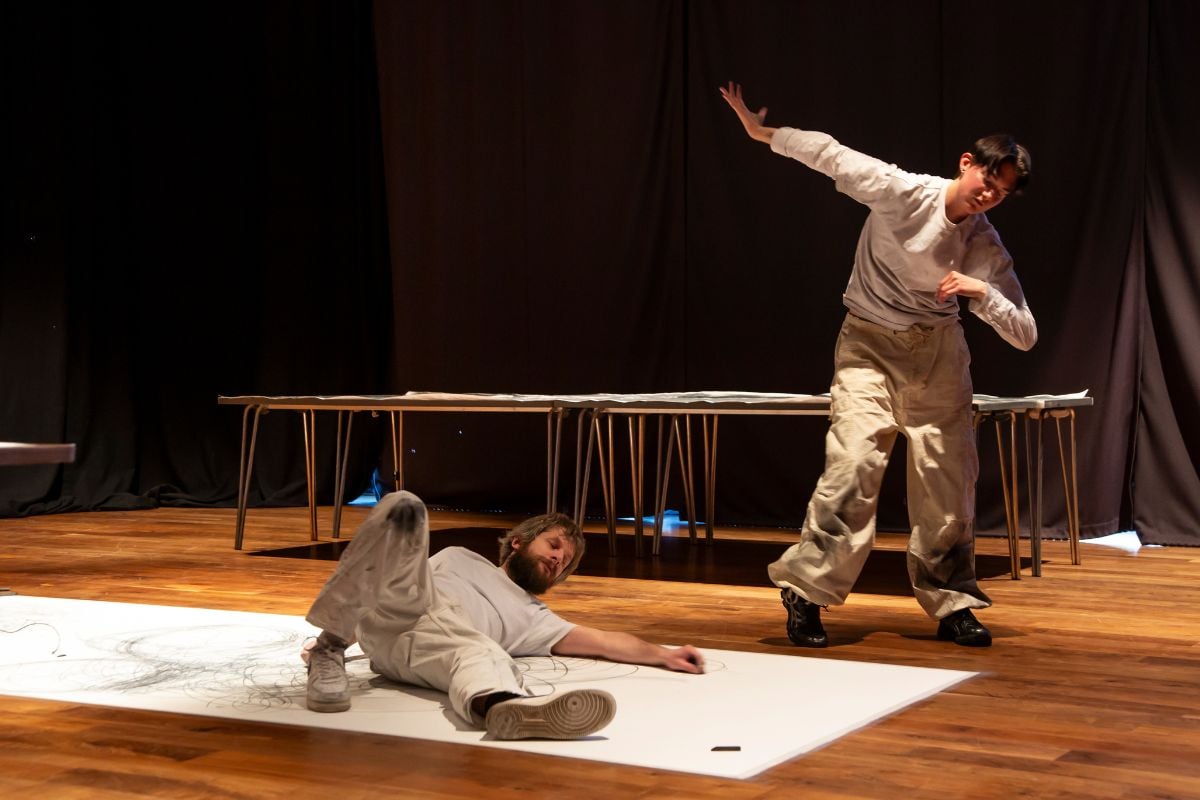
Gerald Curtis and Xan Dye in a performance at DAiSY Fest
Photo: Emma Brown Photography
From connection to collective power: The future of Disability Arts networks
When artists and organisations come together to discuss a more inclusive future for the sector, the whole landscape can change, writes the managing and artistic director of DAiSY (Disability Arts in Surrey), Cara Flowers.
On 21 and 22 November, more than 600 disabled artists, cultural leaders, academics, grassroots organisers and institutional representatives gathered at G Live in Guildford for DAiSY Fest, a celebration of disability and cultural activity. The event marked a significant moment for the Disability Arts movement in the South East and, arguably, within the UK.
We came together to examine not only why these networks matter, but how they might evolve to sustain disabled and neurodivergent artists in an increasingly challenging cultural landscape.
Across two days, the theme of ‘Connections’ unfolded in discussions, performances, workshops and exhibitions, revealing the power of exchange to galvanise a collective voice and strengthen the foundations of a sector facing challenges.
A sector in conversation
Our Friday Forum symposium opened with a sense of urgency. As art funding shrinks and social care continues to operate under immense strain, speakers and attendees alike recognised that networks, whether grassroots, institutional or digital, are no longer optional, but essential.
Festival producer Martin Swan described the event as “the first national moment that addresses the community element of our sector”, and the day’s ambition matched that scale. Representatives from the likes of Arts Council England, the National Trust, and the Heritage Lottery Fund, alongside MPs and civic leaders, all joined Surrey’s own vibrant Disability Arts community.
Rather than adopting a traditional conference format, DAiSY embraced a ‘long table’ method, a non-hierarchical space where any attendee can join the conversation and contribute.
Together, participants explored questions such as how to build democratic, disability-led structures, and how to reach disabled artists not currently connected to any network, with the resulting discussions covering both a local and international context.
Delegates highlighted the work of the European Arts and Disability Cluster and the Progressive Art Studio Alliance in the US, demonstrating how cross-border networks can amplify advocacy and opportunity. Turner Prize-nominated artist Nnena Kalu was celebrated as a powerful example of how sustained networks can support disabled artists to thrive.
One key takeaway was that networks must be vulnerable as well as strategic. Organisations need to share openly, honestly and without competitive barriers if they are to build resilience in the face of increasing pressure.
Artists at the centre
The afternoon shifted focus to artist-led and peer support networks, with participating artists including Charlie Fitz, Anna Farley and Jon Adams.
Here the questions became more intimate. We wanted to know what artists need from networks, and what must they bring in turn to them. We discussed how such networks should be run, and whether a network is the same as a community.
For participants, informal circles of support were invaluable for the chance to share Access to Work knowledge, exchange lived experience and form friendships that sustain creative practice. The Resting Up Collective and the Disability Pride Radical Reset movement were cited as examples of how networks can resist ableist structures and model new approaches to creativity and community.
Meanwhile, artist Charlie Fitz brought particular attention to the need for a culture of care, reminding us that networks can be spaces of healing, not just professional development.
Finding time to celebrate as well as strategise
If Friday was about conversation, Saturday was about celebration. G Live opened its doors to the public with more than 30 activities showcasing the extraordinary breadth of Surrey’s Disability Arts community.
The building buzzed with performances, dance and creative workshops. Organisations like Halow Project, Include and Post 19 filled the foyer with music, while more than five exhibitions graced the walls of the venue.
The day demonstrated not only the creative excellence of DAiSY members but also the palpable warmth that Surrey’s Disability Arts sector has cultivated. As many attendees observed, this level of cohesion is rare on a national scale. It’s why we believe in the power of shared projects and resource exchange.
Towards a national movement
Across both days, one message was clear: networks matter.
Networks build movements. They amplify a collective voice. They help artists navigate systems designed without them in mind. They create belonging. Most importantly, they can reshape power structures within the arts.
The sector may feel fragmented, but DAiSY Fest generated real momentum towards creating a national Disability Arts network, interlinked with regional and grassroots networks, and informed by international models.
By the close of the festival, we knew three things to be true: when we connect, we are stronger. When we collaborate, we can change the landscape. And when disabled-led networks lead the way, the whole sector shifts.
Join the Discussion
You must be logged in to post a comment.